At five months old, a puppy should be hard to keep still. Undi could do little else.
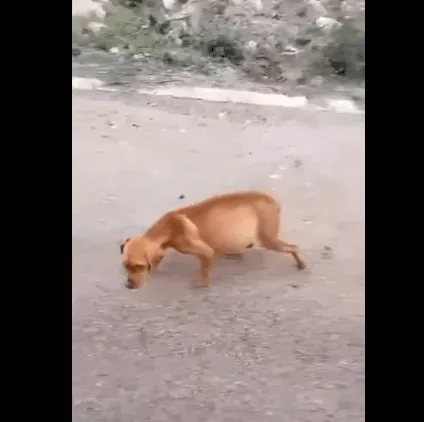
Rescuers found him beside a road, his abdomen swollen far beyond what his small frame could carry. When they came near, he barely reacted. He had no energy to spare for greeting strangers, and he gave no sign of wanting to run.
His quiet did not read as giving up so much as conserving. What followed was a careful medical effort at Dublin Shelter, and the account of it ends without a final diagnosis. This is what is known.
A Puppy Too Weighed Down to Do More Than Sit
Even a quick look told rescuers that Undi needed a veterinarian. His belly was so enlarged that it seemed to pull against the rest of his body, and every movement looked like work.
Standing took great effort, and walking looked nearly out of reach. Lying down did not help much either. The pressure inside his abdomen made it hard to find a comfortable position, so he stayed seated for long stretches.
His legs trembled under him while the swollen belly rested between them. His breathing looked slow and strained, as though each breath had to push against a weight.
He showed none of the usual puppy behavior: no wagging tail, no interest in the people gathering around him. When rescuers reached for him, he did not run or resist. He let them lift him with care, and he appeared to save what little strength he had for the trip ahead.
Video: Five-Month-Old Undi Struggles to Stand Beneath the Pressure of a Swollen Abdomen
At Dublin Shelter, the Exam Showed Deep Weakness
Undi was taken to Dublin Shelter, where the veterinary team began examining him right away. Early tests found that he was severely anemic and profoundly weak.
That suggested his body had been under strain for longer than the roadside scene alone could show. The swollen belly was the most visible problem, but it was not the only one.
Of everything the team faced, the pressure in his abdomen was the most urgent. It affected how he breathed and how he moved, and until it eased, every other part of his care would be harder for him to tolerate.
The Procedure That Removed More Than Three Liters
Veterinarians carefully drained the fluid that had collected inside him. By the time they finished, they had removed more than three liters.
For a puppy of Undi’s size, that is a remarkable amount. The fluid had been pressing on his internal organs, making each breath harder and turning ordinary movement into an ordeal.
As the pressure dropped, he could breathe with less effort. His body looked lighter, and his posture began to loosen.
Still, the drainage brought relief and nothing more. It did not explain why so much fluid had built up, and that question was just as important as the procedure.
A Search for a Cause That Has Not Yet Produced One
Blood tests, ultrasound scans, and detailed examinations came next. Some results raised concerns about Undi’s liver. Other findings suggested that his condition might have been present since birth.
Even so, no single diagnosis accounted for everything the team was seeing, and no specific illness has been named. That uncertainty made each decision more delicate.
The veterinarians kept investigating while they treated him, working without a confirmed cause to point the way.
Why His Treatment Could Not Be Hurried
Undi’s care became a balancing act. His anemia needed support, his nutrition had to be managed carefully, and the staff watched for any sign that the fluid might return.
Nothing could be rushed. His weakened body could not handle aggressive treatment without careful thought, and organs that were already under strain needed protection just as much as his symptoms needed relief.
Each day meant weighing one concern against another. The team worked to ease his discomfort without pushing his fragile body too far.
His future remained uncertain. But he was no longer alone beside a road. People were now reading his results, monitoring his breathing, and looking for answers his body could not give them.
A Patient Who Stayed Gentle
Through unfamiliar rooms and uncomfortable procedures, Undi remained remarkably calm. He did not struggle during blood tests, and he stayed quiet through scans and examinations.
When caregivers touched his swollen abdomen or shifted his position, he watched them without showing fear.
Exhaustion may have played a part, since a puppy this weak has little energy to protest. Yet as the days passed, the shelter’s account suggests that was not all. Undi seemed to want closeness. He accepted affection and relaxed when someone spoke softly beside him.
New people and new procedures could easily have made him pull away. Instead he let his caregivers stay near, and that willingness to accept help stood out after all he had been through.
What Helped Beyond the Medicine
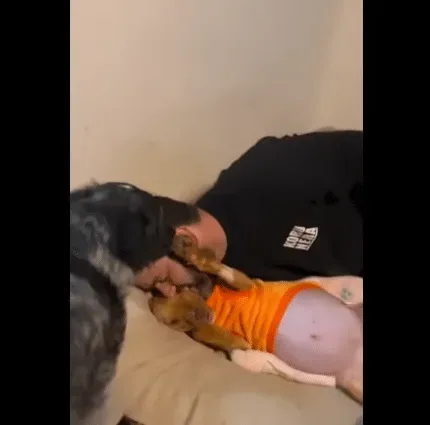
Medication and monitoring helped stabilize him, but some of his greatest comfort came from something simpler. When a caregiver lifted him and cradled him against their chest, the tension in his small body eased.
His breathing slowed and his eyes softened. For a few quiet minutes he did not have to bear the weight of his own swollen body, because someone else was holding him.
The illness had not gone away, and the tests had not supplied every answer. But in a caregiver’s arms, Undi could rest without facing the discomfort alone.
The rest of his routine was practical. A warm blanket kept him comfortable while he slept, regular meals supported his weakened body, and medication addressed the problems the team could identify. Gentle affection was part of the day too. Undi was a patient, but he was also still a puppy who needed company and the reassurance that someone would stay close.
Meeting the Shelter’s Other Dogs
Once he became more stable, caregivers slowly introduced Undi to some of the shelter’s other dogs, watching every meeting closely.
After weeks of pain and weakness, he might have been nervous or defensive around unfamiliar animals. What caregivers saw was quiet curiosity. Undi watched the other dogs move, let them approach, and seemed comforted by having them nearby.
There was no aggression and no attempt to hide. He showed the dogs the same gentleness he had shown the people treating him.
For short periods, this gave him something closer to an ordinary puppy’s life. He was no longer confined to a treatment room. He was among other dogs and familiar voices, with caregivers who noticed when he grew tired.
His body still needed support, but his world had grown larger than his pain.
The Questions Still Open
Undi’s story is not finished. Veterinarians are still working to understand the condition that caused so much fluid to collect in his abdomen, and his health will need close monitoring, continued treatment, and patience.
There may be setbacks, and there may be hard decisions ahead. No report says whether he has been adopted, whether the fluid has returned, or what the final diagnosis will be, so those questions remain open.
Some things have clearly changed. Undi is no longer a five-month-old puppy sitting beside a road because lying down was too uncomfortable. He has a safe place to rest, a medical team searching for answers, other dogs nearby, and people ready to hold him when he tires.
Healing does not always begin with a diagnosis. Sometimes it begins when the pressure is lifted, when a frightened puppy accepts a gentle touch, and when someone helps carry a weight he cannot manage alone.