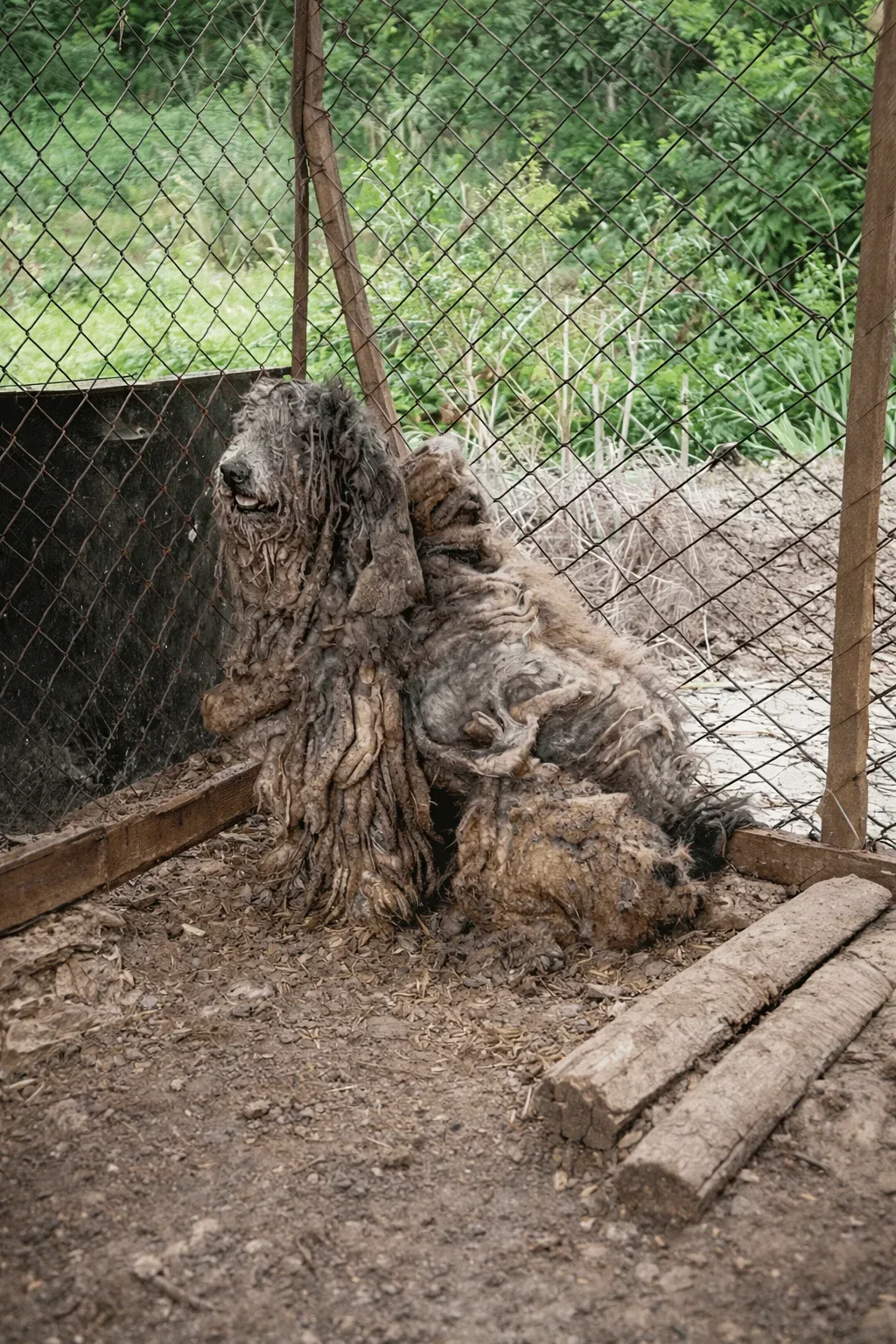
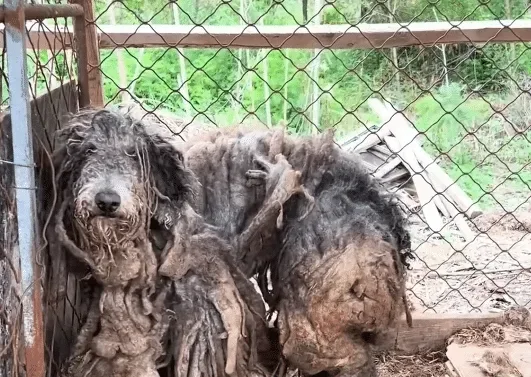
Behind a small, run-down house, a narrow metal cage held what looked like a mound of felted rope. Rescuers had to look twice before they understood that a dog was somewhere inside it.
He made no sound as they approached. He did not back away or show any defensiveness. His stillness said a great deal about the life he had been living.
The Cage Everyone Stopped Seeing
According to the rescue account, neighbors had noticed the dog at one time. Gradually, the cage faded into the background of the yard, and so did the animal inside it.
His owner was an elderly man who struggled with alcohol and, by then, paid the dog little attention. Meals came irregularly, and clean water was never certain. The floor of the cage was in a state that was hard to look at for long.
Rescuers said the smell reached them first, followed by that unsettling quiet. The dog’s coat had knotted so thickly that his eyes were barely visible. He looked less angry or afraid than simply lost.
Then the door was opened, and he did not run. He hesitated. After roughly four years, the small enclosure appeared to be the only space he knew.
Video: A Giant Poodle Hesitates at the Open Cage Door
A Hand Offered Slowly
The rescuer did not hurry him. He crouched low, spoke softly and gave the dog time.
Then he reached into the cage, not to seize the dog but to reassure him. The rescue account says it had been years since a human hand had touched this dog without hurting him. This time, nothing bad followed.
Little by little, the team guided him out. The hardest part of the morning still lay ahead.
More Than an Hour Under the Clippers
Taking off the matted coat required over an hour. With every section that fell away, more of the damage it had covered came into view.
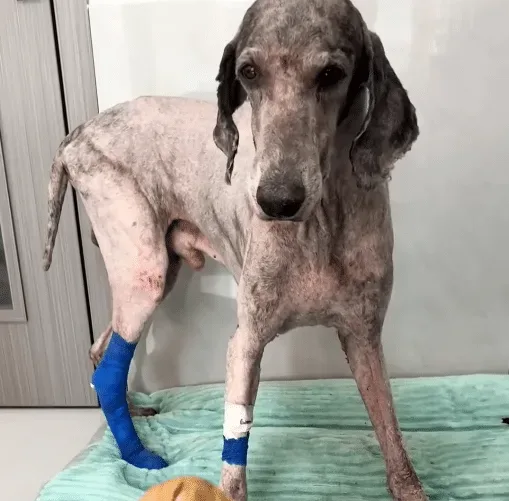
The skin underneath was in poor shape. It was infected and crawling with parasites, and it carried open wounds that the rescue account ties to long-term neglect and constant contact with waste and metal.
The rescuer kept going. He cleaned the wounds one at a time with antiseptic, working slowly and steadily.
When the last of the mats were gone, the dog’s breed finally showed: he was a Giant Poodle, a breed people often associate with elegance. Now he looked thin and worn, a frame that seemed to be holding itself together with effort.
What the Clinic Found
At the veterinary clinic, the examination confirmed how far his health had slipped. He was severely underweight, running a high fever and fighting a body-wide infection. The veterinary team also found signs of pneumonia, liver inflammation and intestinal bleeding.
Without his heavy coat, he could no longer keep himself warm. He shivered until someone dressed him in a small sweater.
He was depleted in nearly every way. But he was alive, and that gave the team something to build on.
Learning That Hands Could Be Gentle
At first, kindness did not seem to reach him. He did not wag his tail or seek out comfort. When people came near, he froze, as though waiting for something bad to happen.
Trust came through repetition rather than any single dramatic moment. Food arrived at the same time each day. Medicine eased his pain. Hands approached gently and withdrew just as gently, with no shouting and no harm.
Then one day a small movement appeared at the end of his body: a hesitant tail wag that stopped almost as soon as it began. It was brief, but it was the first visible sign that his fear was starting to loosen.
Weight, Wounds and Following Footsteps
His body recovered in stages. The infected wounds began to close. His appetite returned, and mealtimes shifted from a struggle to something he finished eagerly. The ribs that had once stood out sharply gradually softened as he gained weight.
His legs grew stronger and his eyes looked clearer. Before long he was trailing his rescuer from room to room, as if reluctant to lose sight of the one safe presence he had found.
The emergency had passed, and his body could finally start rebuilding. The emotional recovery was quieter. He began leaning into touch, resting his head on a person’s lap and choosing to stay close rather than freeze.
Half a Year Later
Six months on, it was hard to believe he was the same dog. His coat had grown back clean and soft, and it was carefully kept. He stood taller, and his eyes looked bright and alert.
The dog who had once seemed unfamiliar with tail wagging now met his mornings with energy. He played, explored and trusted the people around him. The cage, the smell and the constant fear were no longer part of his days.
In their place was a healthy Giant Poodle living a very different life from the one behind that rusted door.
Why the Weeks After Mattered
The most visible turning point was the opening of a cage door. Yet the weeks and months that followed may have counted for just as much.
Wound care, veterinary treatment, regular meals and calm, predictable handling gave his body time to heal. That same patience gave him room to learn that people could be safe.
Getting a dog out of a cage can be the simpler step. Helping him believe the world has changed takes longer, and for this Giant Poodle, that process finally had a chance to begin.