It was not the kind of bark that makes a neighborhood look up. It was thin and tired, and it came again and again at long intervals, as if whoever was making it had not quite given up on being heard.
The sound came from a dark, neglected corner that few people had any reason to visit. The rescuers who caught it decided to follow it.
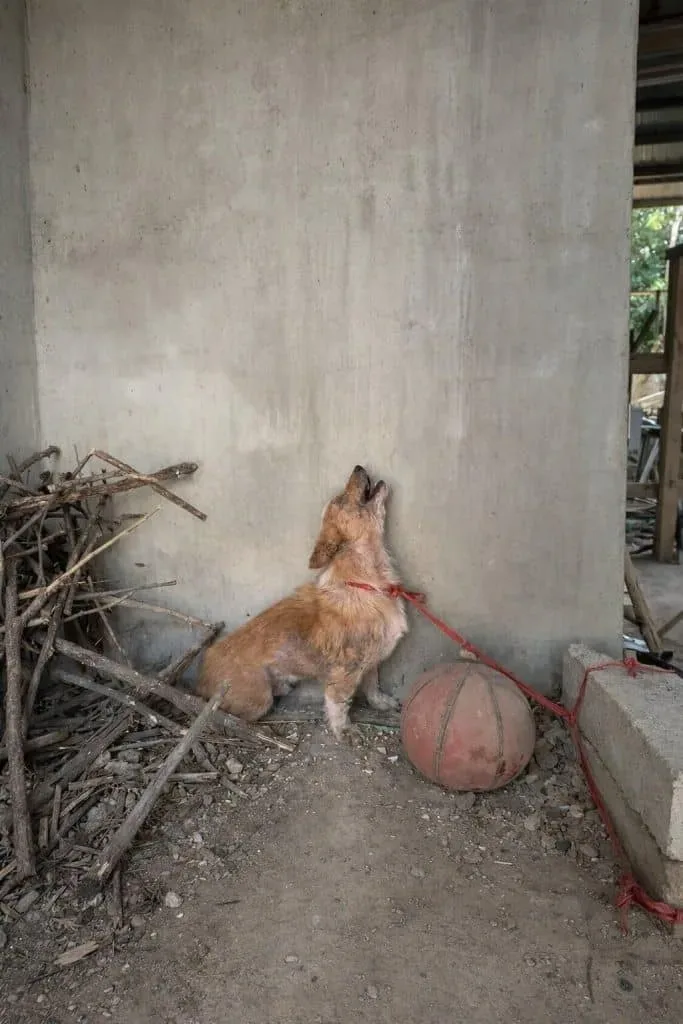
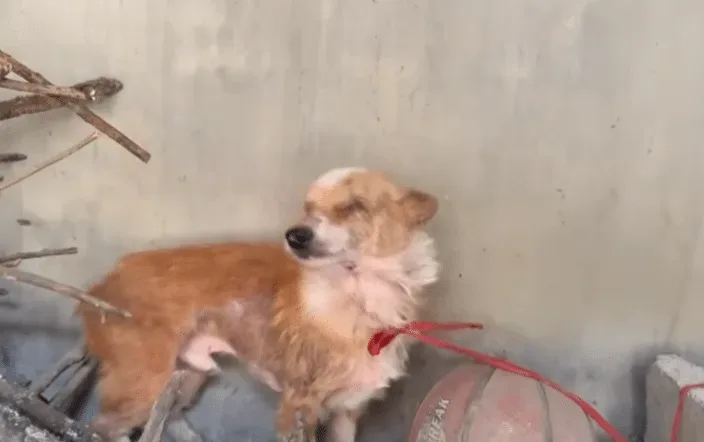
At the end of that trail was a thin dog, fastened to a short red chain. His fur was tangled, his skin was irritated, and the ground available to him was only a few steps wide.
A Bark Too Quiet to Startle Anyone
The spot was damp and dirty. The ground bore the marks of a long period without proper care, and nothing about it invited a second glance. That detail matters, because the dog could easily have gone unnoticed.
His condition was clear before anyone laid a hand on him. His ribs showed through a coat that had clearly suffered. Large areas of fur had thinned or disappeared, leaving tender skin exposed between the mats that were left.
The chain defined the size of his day. He could stand, turn around and lie down. Then the metal pulled tight and stopped him.
When the rescuers stepped into the space, the dog watched them closely, and his wariness was obvious. Strangers had arrived in a place where few people ever came, and he had no way to know what they intended.
Video: The Search for a Tired Bark Ends at a Short Red Chain
Fed Before Freed
The rescuers did not rush him. They put food down within his reach, then stepped back to give him space.
Hunger did what no words could. The dog edged toward the bowl and began to eat, quickly, taking each bite like an animal who could not count on another meal. His pace said a great deal about how little he had to relax about.
The people stayed close but did not crowd him. They kept their voices soft while he finished, and they let the meal be the first exchange between them.
Gradually, some of the stiffness left his body. Only when the moment seemed safe did one of the rescuers reach for the chain. The metal that had marked the edges of his world was finally removed.
The order of those steps was deliberate. Food came before touch, and calm came before release. Nothing was forced on a dog who had not yet learned what the newcomers meant.
A Room With No Pull at His Neck
From there he was taken to a rescue center, where nearly everything was unfamiliar. There was clean bedding and fresh water. Meals arrived on a regular schedule, and no one took the bowl away before he was done.
For the first time in this account, he could choose where to stand and where to rest. He could cross a room without feeling a chain tighten.
Losing the chain did not remove the caution it had left behind. He stayed alert whenever caregivers entered. His eyes followed their hands, and his body stayed ready to pull back. He had lived expecting little from people, and one rescue could not undo that overnight.
The caregivers did not ask him to be affectionate. They brought food, refreshed his bedding and sat nearby without demanding any response. He was allowed to watch the new routine at his own speed.
The pattern held from day to day. Meals came, the same voices returned, and no one tied him up again. Slowly, the center began to look less like another temporary stop and more like somewhere he might be safe.
Slow Work Beneath the Tangles
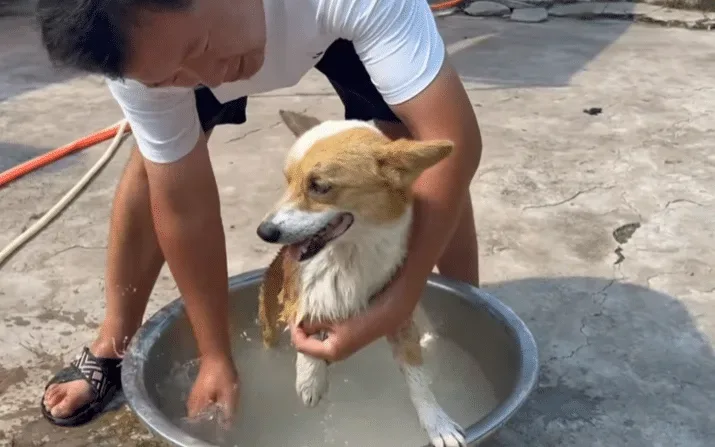
Once he seemed calm enough to accept closer attention, the team turned to his coat. The mats could not simply be pulled off. Under them the skin was inflamed and fragile, and some areas were especially sore after going untreated for so long.
The caregivers trimmed the tangled fur bit by bit, pausing whenever he seemed uncomfortable. They cleaned his body carefully and applied treatment to soothe the damaged skin.
No one tried to fix everything in a day. Healing depended on repetition: gentle cleaning, medication, nourishing meals and patient hands coming back again and again.
Throughout, the dog stayed remarkably calm. He did not try to bite or escape. He stood quietly while the team worked, and his steadiness suggested he was beginning to register a difference. These hands were not holding him in place. They were removing what had been hurting him.
Small Signs, Easy to Miss
The earliest improvements were modest. He finished every meal. He slept for longer stretches without waking at every noise. His body gained strength, and the irritation across his skin began to ease.
His expression changed too. When rescuers first found him, his eyes had looked distant and worn out, and he had watched people as if he expected nothing from them.
Now he began looking toward the door when familiar caregivers came in. His ears lifted at voices he recognized. His tail moved, cautiously, when food was set down nearby.
None of these signs was dramatic on its own. Together they showed a dog who was starting to treat the daily routine as something he could rely on.
The Steps He Chose to Take
Then came a moment that stood apart. Instead of waiting at the back of the room, he stepped forward to greet someone.
It was only a few steps, but they carried weight. A short stretch of ground was all the chain had ever allowed him. Now he covered a similar distance by choice, to move toward a person. Fear no longer seemed to be making every decision for him.
Learning How a Group Works
As his confidence grew, the dog was introduced to the other animals at the rescue center. At first he kept his distance and only watched.
The other dogs moved freely through the open space. They played, rested beside one another and walked up to caregivers without hesitation. He seemed unsure how to join in.
Curiosity slowly outweighed caution. He moved closer, followed the group for a short way, and then took part in some gentle play.
It was a very different arrangement from the one he had known. There was no small patch of ground to guard and no need to keep barking in the hope that someone might hear. Other dogs lay down near him, people called him over, and a clean, safe place was waiting when he grew tired.
None of this came from a single turning point. It built up through shared space, familiar voices and the simple fact that he was no longer alone.
A Fuller Coat and a Faster Stride
With time, healthy fur appeared across his healing skin, first in small patches over areas that had been almost bare. Gradually the coat grew fuller, cleaner and softer.
Regular meals rebuilt his body, and his ribs became less visible. His movements carried an energy that had been missing when rescuers first followed the barking into the dark.
Before long he was running through the rescue area, trailing after caregivers and playing beside the other dogs. His tail moved freely and was no longer held low.
The physical change was striking, but the change in behavior mattered just as much. He no longer stood motionless as if bracing for something bad. He went toward people and accepted gentle affection.
What the Account Shows, and What It Leaves Open
The short red chain once decided where he slept and how far he could go. Now, when he runs, nothing drags behind him. His world reaches well beyond those few steps, with clean ground under his paws and people who notice what he needs.
It all began because someone listened to a tired bark rather than treating it as background noise, and followed it to a life waiting in a place most people would have passed by.
Some questions remain unanswered. The account does not say how long he was kept on the chain, who was responsible for him, or whether a permanent home has been found. What it does describe is where he stands at the last point it covers: in a rescue center, healing, eating well, playing with other dogs and approaching people on his own.
The past could not be undone in an afternoon. His skin needed treatment, his body needed food and his trust needed time. But the chain could be taken off, and once it was gone, recovery finally had room to begin.