Somewhere inside a heavy, hardened mass of fur, a pair of eyes watched the strangers approach.
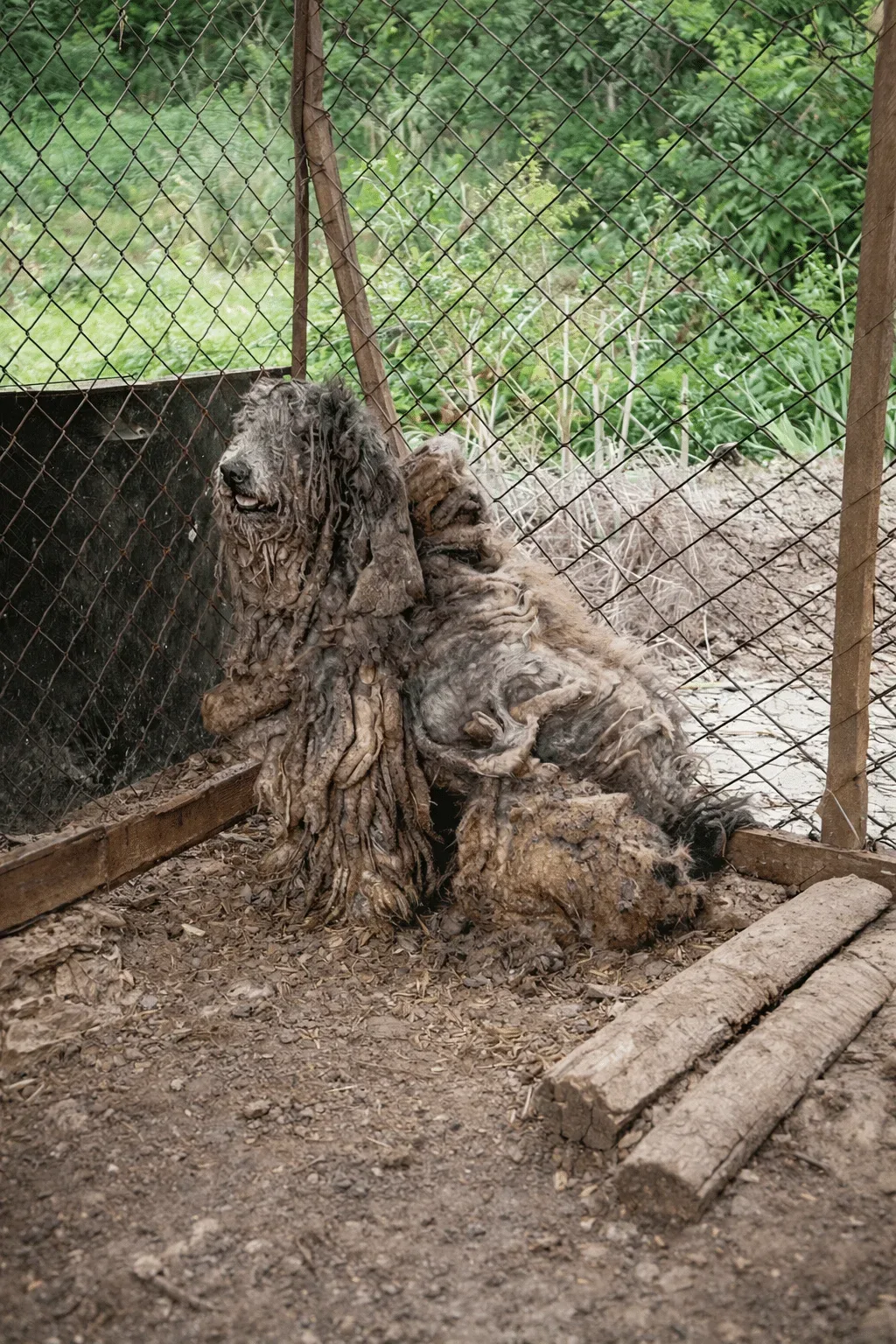
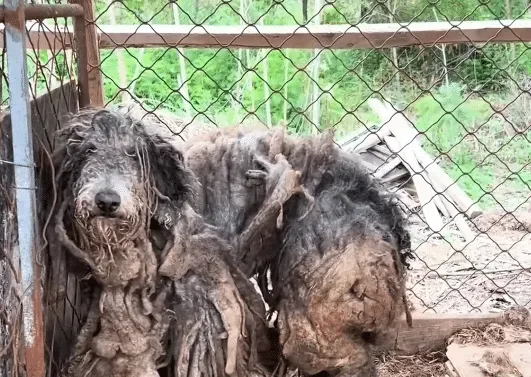
That was nearly all rescuers could make out of the dog living in a narrow metal cage behind a small house. He was a Giant Poodle, a breed known for its elegance, but four years of confinement had hidden every trace of it. He had little room to move and almost none of the steady care a dog relies on each day.
The account of his rescue is not a story of sudden miracles. It moves slowly, through a door opened with care, a coat removed section by section, and a frightened animal gradually discovering that routine could be safe. The dog is never named, but the account follows him closely from the cage to a very different life six months later.
A Familiar Sight No One Questioned
Neighbors knew a large dog was being kept behind the property. Over time, the sight had become ordinary, part of the scenery rather than a question that demanded an answer.
According to the account, the owner was an older man who reportedly struggled with alcohol and could no longer give the dog consistent care. Food came irregularly, and clean water was not always available. The cage grew filthy, and the dog stayed inside it year after year.
When rescuers reached the property, what sat inside the enclosure looked less like a dog than a motionless mound. Thick mats had twisted into heavy cords across nearly his whole body. His face was almost entirely covered, and only his eyes showed through the overgrown coat.
He did not bark as the strangers came closer. He did not lunge or growl. He looked back at them, quiet and still.
Video: The Giant Poodle Steps Out of His Cage After Four Years
An Open Door He Did Not Rush Through
When the cage door swung open, the dog stayed where he was. The enclosure was a harsh place to live, but it was the only world he still knew, and leaving it was not as simple as it looked from the outside.
The rescuer did not try to pull him out. He crouched near the opening and waited, offering time instead of pressure. He spoke softly and kept his movements slow. When he reached in, the aim was not to force the dog forward but to let him feel a hand that was not going to hurt him.
With patience and reassurance, the rescuers eventually guided him out. Only in open space could they see how much the mats had been concealing.
An Hour of Clippers and Careful Hands
A brush would have made no difference. The coat was too tangled, so it had to be shaved away section by section, and the work took more than an hour. Each pass revealed more of what lay underneath.
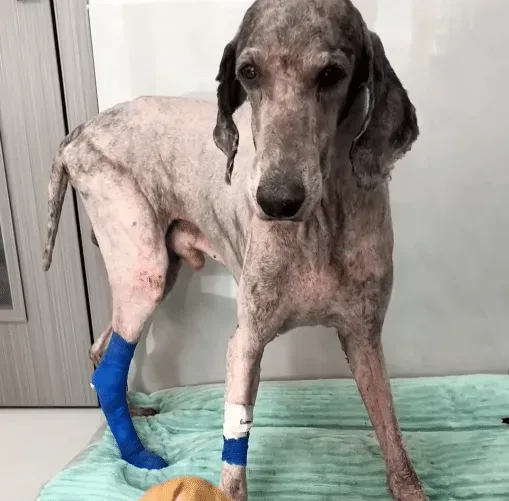
His skin was in very poor condition. Rescuers saw signs of infection, parasites, and long-term irritation from constant contact with dirt, waste, and the rough surfaces of the cage. Some areas were inflamed and badly damaged.
The team began helping him on the spot, cleaning his body gently and applying antiseptic treatment. Every movement was calm and deliberate, meant to ease his pain without adding to his fear. It was slow, unglamorous work, and it asked for as much patience as the moment at the cage door.
When the last mat came away, what remained was a Giant Poodle worn down by years of confinement, but alive and still reachable.
A Body Struggling on Several Fronts
At the veterinary clinic, the medical team confirmed that his condition was serious. He was severely underweight and had a high fever, along with signs of a systemic infection. Examinations also suggested pneumonia, liver inflammation, and intestinal bleeding.
Without the thick coat he had carried for so long, he had trouble keeping warm. He trembled constantly until caregivers dressed him in a small sweater to help hold in his body heat.
At this stage the rescue stopped being a matter of clippers and cleaning and became a matter of medicine. He looked exhausted, yet he was still here, and that gave the people around him something to protect.
Routine Before Affection
In the early days, gentleness seemed unfamiliar to him. He did not lean into anyone’s touch, and his tail stayed still. When people came near, he did not seek comfort. He froze, like a dog bracing for something unpleasant.
What slowly replaced that fear was routine rather than any single dramatic moment. Meals came at regular times. Medicine was given on schedule. Hands approached gently and withdrew gently. Nobody shouted, and nobody pushed him beyond what he could tolerate.
Caregivers fed him, treated his wounds, and let him rest, repeating the same calm pattern day after day. None of it was grand, but for a dog with his history it formed something new.
The First Wag, and What Came After
Then came a small sign. His tail moved, briefly and slightly, but unmistakably. For many dogs a wag is easy to overlook. For him, it suggested that fear was beginning to loosen its hold.
His body began to respond as well. His skin reacted to treatment, and the inflamed areas started to heal. His appetite returned, and meals that once needed coaxing began to disappear from the bowl. Weight came back gradually, his legs grew steadier, and his eyes looked clearer and more alert.
Before long, he was following his rescuer from room to room, staying close.
The emotional recovery mattered just as much. He began to accept touch, and then to enjoy it. He rested his head on laps and chose closeness over distance. The dog who had once stood silent in a cage showed a gentle, affectionate side that fear had kept hidden.
Recovery did not erase what he had been through. It did give him a different present to live in.
Six Months Later
Half a year after the rescue, the change was striking. His coat had grown back soft and clean, and it was carefully maintained. He carried himself more strongly, and his expression was brighter. The dog who had seemed cut off from everything now moved through his days with interest and awareness.
He played. He explored. He met each morning with energy.
The cage was no longer part of his life, and neither was the isolation. In their place were a regular routine, daily care, and renewed strength.
It was hard to believe he was the same dog, and in a sense he was. The rescue had not produced a new animal. It had given the same one room to live the way he should have been able to all along.
What the Account Leaves Unsaid
Opening a cage is one step. Helping a dog believe the world can be safe is another, and here it unfolded over weeks and months rather than in a single afternoon. It took patience to earn trust from an animal who had gone years without it, and consistency to show him that food, warmth, and kindness would still be there tomorrow.
Some questions remain unanswered. The account does not give the dog’s name, and it does not say what became of the owner. What it does show is a Giant Poodle who survived four years behind metal bars, then met people who opened the door slowly and stayed beside him afterward.
His days now include comfort, gentleness, and a second chance.