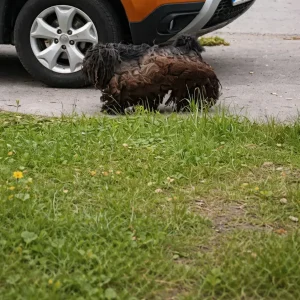
The footage lasted less than a minute, and it was not good footage. It was shaky and grainy, filmed from far away. On a lonely road, something small moved slowly through the dust.
It took a moment to see that it was a dog. He was not walking. He hauled himself forward on his front legs while his back legs dragged behind him over the gravel. The clip had no sound worth mentioning, and it didn’t need any.
A Clip Too Short to Say Where He Was Going
For the rescue team watching, the question was not whether to go but how fast they could leave. They grabbed their car keys and headed out. In this work, waiting has a cost. Each extra hour on pavement meant more skin worn away and less strength left in the dog.
The video could not say where he would be by the time anyone arrived. It showed only a dog struggling along a seemingly forgotten road. For the team, that was reason enough to start driving.
Video: The Search Along the Road and the Moment the Dog Is Found
Four Hours Between the Gravel and the Grass
The road was long, and the dog was small. The team drove it back and forth, stopped to walk into tall grass, and called out across open ground. Four hours passed. Somewhere in that stretch, they began to worry they had come too late.
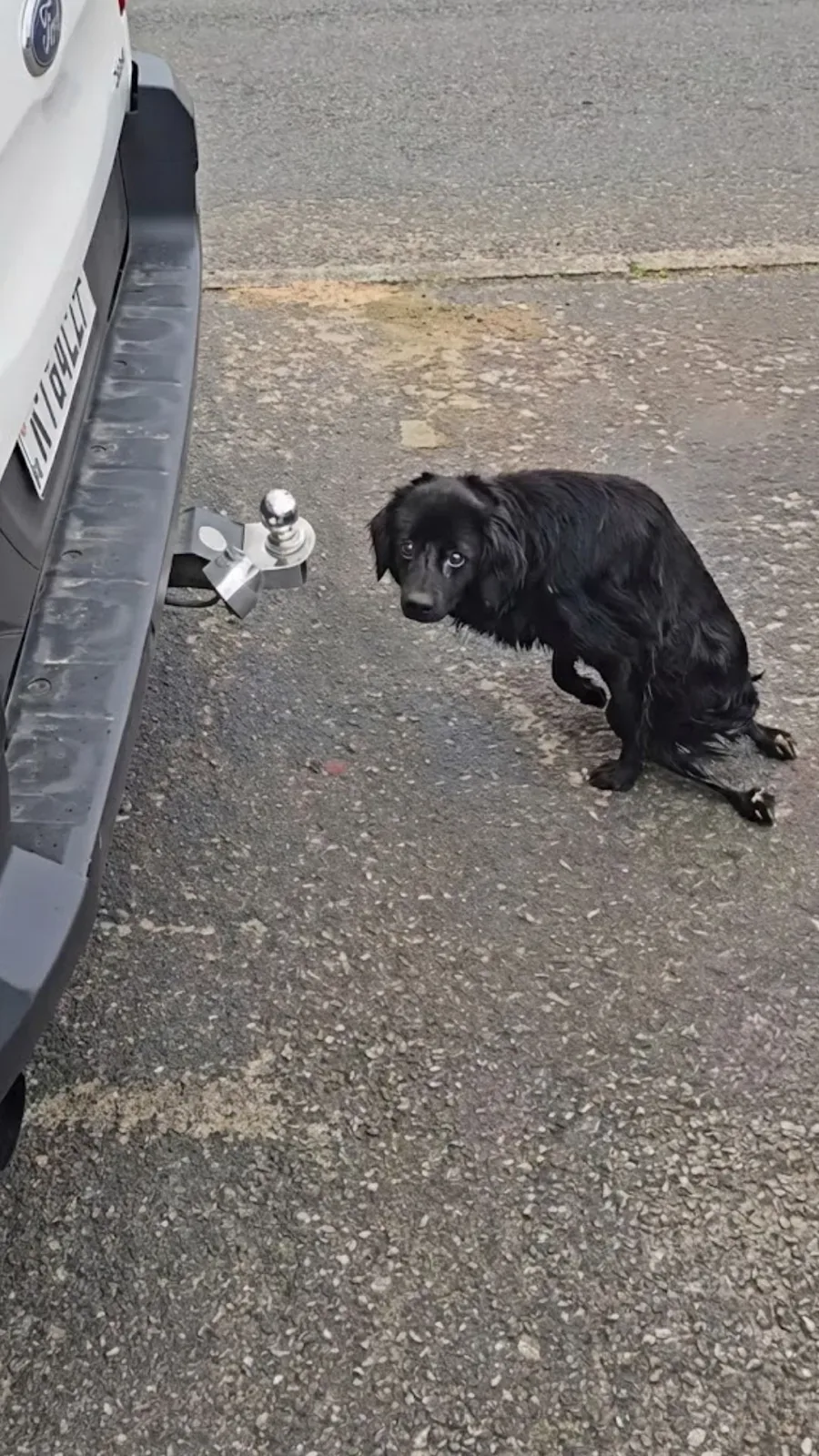
Then they saw him, curled up near the roadside and barely moving.
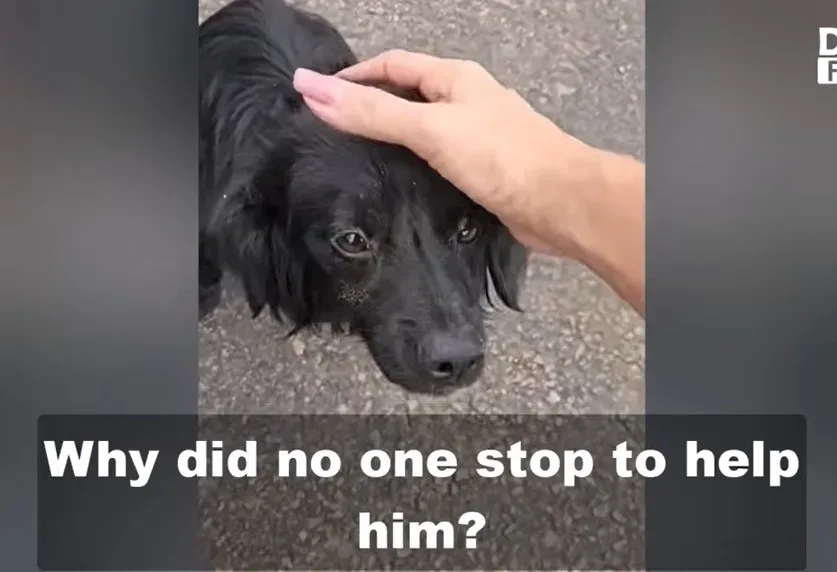
When he lifted his head and met their eyes, he did not pull away and he did not growl. To the rescuers he looked tired and frightened, and perhaps a little relieved that the long effort of dragging himself forward had ended.
Carrying Almost Nothing
Lifting him felt like handling something that might break. He weighed very little. His body was stiff, and he trembled from pain and exhaustion.
The team laid him on a soft car seat. After what was likely many days on dirt, stone and asphalt, it was a very different surface to rest on.
Wounds That Pointed to Weeks, Not Days
At the clinic, the veterinary team examined his hind legs and found serious damage. The skin along his thighs was torn, with raw, open wounds where he had slid over gravel and pavement. Infection had already started, and the friction burns were deep. The rescuers believed this had been going on for weeks rather than days.
After the wounds were cleaned, the team put a bowl of food in front of him. He finished it within seconds, swallowing more than chewing, as if it might disappear. When the bowl was empty, he looked up at the people around him with an expression the rescuers described as almost confused.

An X-Ray With No Easy Fix
The team had been hoping for a fracture, something surgical that might be reversed. The X-ray told a different story.
The veterinarian pointed to severe damage in his spine, and it was not new. The spine had been broken long before and never treated, and it had healed in a twisted, permanently damaged position.
“There’s no surgery that can fix this,” the vet told them gently. “He will never walk again.”
The dog was paralyzed, and that would not change.
The Calmest One in the Room
The people in the exam room grieved for what he would not do, such as running and jumping. The dog did not seem to share that grief. Now clean, fed and warm, he looked back at them with soft, steady eyes and showed no sign of anger or distress.
To the rescuers, it seemed he had adapted to his body long before anyone found him, and that what he lacked was not working legs but someone willing to stop and notice. That is their interpretation, but his calm in the exam room lent it weight.
A Daily Routine of Care

Looking after a paralyzed dog takes steady work. His routine includes:
- Laser therapy sessions to ease stiffness in his spine
- Daily wound cleaning and bandage changes
- Diapers to keep him dry and help prevent infection
- Careful pain management
- Constant monitoring and patience
The effort is met with small, clear responses. When the team approaches, his tail thumps against the bedding. When they talk to him, he answers with a soft, throaty bark that fills the room.
What Nobody Can Say About the Road
No one knows what happened to him before that road. He may have been hit by a vehicle and left behind. He may have been attacked, or discarded once he became hard to care for. The account gives no answer, and the rescuers say those questions matter less now than what comes next.
What is known is that he is no longer dragging himself across pavement. He may never run, and one day he may depend on a wheelchair rather than his legs. But a team is now caring for him, and he no longer has to make that journey alone.