He never barked. He never pawed at the gate or asked to be let in. The thin stray simply appeared near a family’s property, chose a spot where he could see the household dogs, and watched them play.
At first, the homeowner figured he was just passing through. Then he showed up again a few days later, and kept showing up until the visits were almost daily. Someone began setting out food and water, and he accepted both. Yet it gradually became clear that a meal was the smallest part of what he needed.
The rescuers who later met him named him Pax. The route from that fence line to a home of his own was built from a string of modest, practical kindnesses.
A Stray Who Only Watched
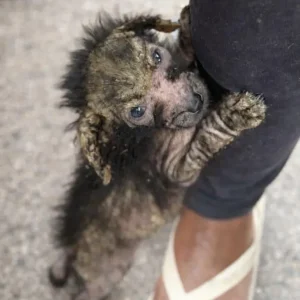
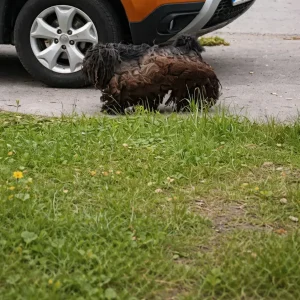
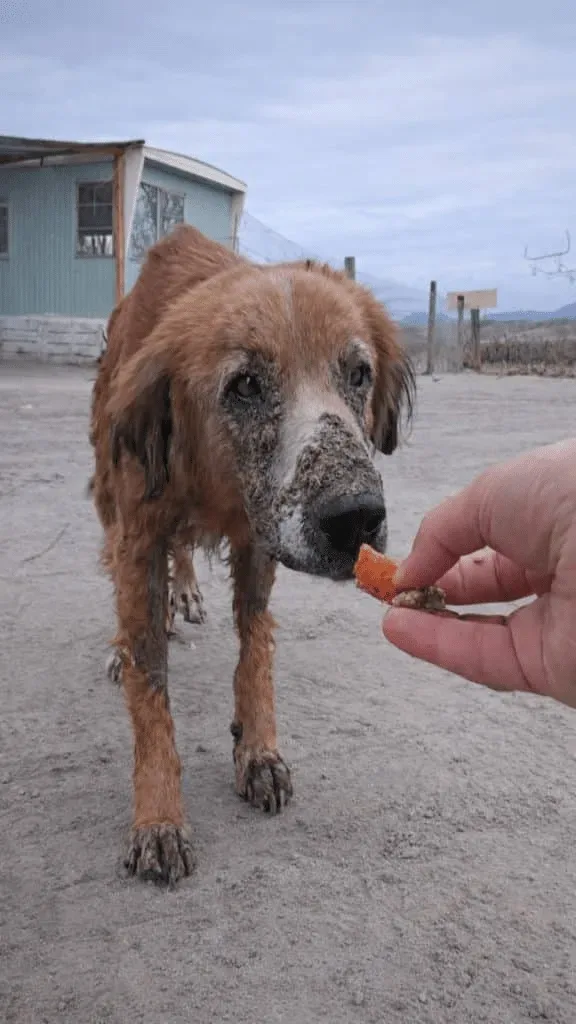
No one knew where the dog had come from or how long he had been on his own. What people could see was a dirty, uneven coat with large bare patches and a body that showed the strain of life without steady care.
His manner stood out just as much. He did not challenge the family’s dogs, and he did not appear afraid of them. Some days he rested beneath a tree near the property. On others he sat beside the fence and followed the animals’ movements with calm interest.
Why he picked this particular yard cannot be known. It may have been the company of other dogs. It may simply have been the first place where a person consistently noticed him.
After food and water appeared, he ate, but he rarely hurried away afterward. He lingered, and day by day his presence became part of the household’s routine. Eventually the homeowner understood that this was not a wandering dog stopping for an occasional bite. He was a dog with nowhere else to go.
Video: Pax’s Story, From the Fence Line to the Rescue Team
When Kindness Needed Backup
Feeding him was generous, but it could not solve the larger problem. The homeowner contacted a local rescue organization and described what had been happening at the property. That phone call moved the dog’s situation from private generosity to organized help.
When volunteers arrived, the dog was resting near the property. He noticed them right away. His eyes tracked their movements and his body grew alert. There was no growling and no aggression, only caution, the kind of watchfulness that suggested a dog used to relying on himself.
The volunteers now faced a practical question: how do you approach an animal who is neither running away nor rushing to greet you?
Treats on the Ground, and Time to Decide
The team chose patience over speed. Rather than walking straight toward him, they crouched at a distance and spoke in calm voices. They placed treats on the ground and left the next move to the dog.
For a while he stayed where he was. Then he took one step closer and paused. After another moment came a second step. The volunteers kept waiting and did not reach for him before he was ready, and little by little the distance between them closed.
Eventually they were near enough to slip a leash gently around his neck. To everyone’s surprise, he accepted it calmly. The tension in his body began to ease, and his tail moved in a small, uncertain wag.
That was when the team gave him his name. Pax means peace, and for a dog this gentle, it seemed a natural choice.
A Quiet Ride and a Hard Look at His Health
Pax climbed into the rescue vehicle without resistance. Leaving the area where he had learned to get by could not have been simple, yet he stayed composed during the drive and quietly watched the people around him. He did not panic or try to escape.
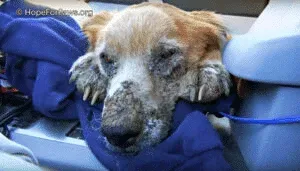
At the veterinary clinic, the full extent of his condition became clear. He had significant hair loss and widespread skin irritation. Mange had damaged much of his coat, and inflammation affected his ears and eyes. Several wounds also needed attention.
Problems like these do not develop overnight. They pointed to a dog who had gone a long time without medical care, protection, or regular shelter.
Patience Under Treatment
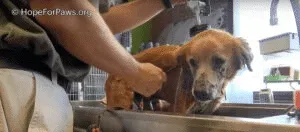
The veterinary staff cleaned his wounds and treated the irritated areas around his ears and eyes. He also received medicated baths meant to soothe his skin and begin bringing the mange under control.
Through all of it, Pax stayed patient. He allowed the team to examine him and accepted each step of the treatment. He seemed to be a dog for whom human attention was beginning to mean relief rather than uncertainty.
Small Changes, Deeper Sleep
The rescue team knew healing would take time. Medication began working on his infections, and nutritious meals helped rebuild strength he had lost on the street. His coat would not return right away. The inflammation would not vanish after a single treatment. Trust could not be restored in a day.
Still, small changes came quickly. Pax started lifting his head when familiar caregivers walked in. He welcomed gentle touch, and his tail wagged more often. None of it was dramatic, and that was the point: recovery arrived as a series of quiet moments rather than one turning point.
Perhaps the most telling change was his sleep. Dogs living outdoors often have to stay alert even while resting, ready to leave a spot at the first sign of trouble. Pax began sleeping deeply, a sign that he was slowly learning he no longer had to live that way.
The First Night Indoors
The Forgotten Dog Foundation helped arrange the next stage of his recovery, and a foster family opened their home to him.
Everything inside was new. Pax explored the rooms carefully, attentive to each sound and unfamiliar surface. A soft bed had been prepared for him, and he hesitated beside it, as if unsure that such a comfortable space was really meant for him.
Then he stepped onto the bed, turned around, and slowly lay down. His body relaxed.
That night, there was no need to look for shelter before dark. A safe place was already waiting.
Routine, Toys, and a Personality Comes Forward
Foster care gave Pax something street life could never promise: routine. Meals arrived at regular times. Medication followed a schedule. Walks became familiar, and the same gentle voices filled the house each evening.
Gradually, he stopped worrying about what would happen next. He learned where his bowl would be placed, found favorite spots for resting, and grew used to the household’s sounds and the people who kept coming back to him.
As his body healed, his personality emerged. Healthy fur began growing across areas that had been bare. His eyes looked brighter, and the discomfort affecting his skin eased.
His behavior changed as well. Pax began carrying toys through the house and inviting people to play. When someone sat nearby, he moved closer instead of keeping his distance. Where he had once accepted affection cautiously, he now sought it out. He rested his head on laps, followed family members from room to room, and curled up beside them whenever he could.
The dog who had watched family life from outside a fence was now taking part in it.
The Family That Chose Him, and the Name That Fits
Before long, an adoptive family learned about Pax. They were drawn to his calm personality, gentle expression, and quiet affection.
When they met, the connection formed naturally. Pax approached carefully at first, then his posture relaxed and his tail began to move freely. The family did not see a damaged stray or dwell on his difficult past. They saw a companion ready to begin again. Soon afterward, the adoption became official.
He arrived in his new home carried forward by many people: the homeowner who noticed him coming back, the volunteers who waited for his trust, the veterinary team who treated his wounds, and the foster family who introduced him to life indoors. Each played a part, and none could have done it alone.
Today, his life bears little resemblance to the one he knew on the streets. His coat has grown healthier, and his eyes carry confidence instead of uncertainty. He plays, rests comfortably, and receives affection from people who love him.
His rescue was not the result of one dramatic act. It was assembled from ordinary decisions: food and water set out by one person, a phone call that brought help, medical treatment, a foster home, and an adoptive family’s promise to stay. Each step might have looked small by itself. Together, they changed the direction of one life.
Pax once returned to the same yard because it was the closest thing he had to a family. Now he no longer has to return anywhere. He is already home.