Bus stops are made for people who are on their way somewhere. In Cajazeiras, one of them became the spot where a dog ran out of road.
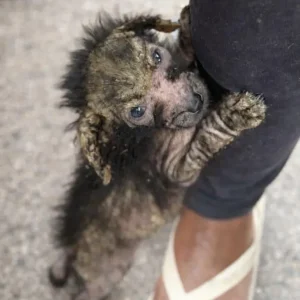
Vitória lay on the pavement, thin and trembling, her coat sparse and patchy. A large swelling covered her right shoulder and climbed toward her neck, and even a small change of position seemed to cost her something. People came and went all day. Some noticed her. Most kept walking.
Then one person slowed down, lowered themselves to her level and held out a hand. What Vitória did next was small, but it set everything after it in motion.
The Dog Nobody Could Account For
No one could say how long Vitória had been there. She did not bark at the people hurrying past, and she made no attempt to follow anyone down the street. She stayed put and watched.
Her condition was hard to miss. She was weak and underweight, and large areas of her coat had thinned so much that her skin had little protection from the ground or the weather. The most worrying sign was the mass across her right shoulder, reaching up toward her neck. It changed the way she carried her body. Standing took effort, and shifting her weight looked uncomfortable.
When the rescuer approached, Vitória showed no aggression, though her frailty kept her movements slow and guarded. The person did not loom over her. Instead of reaching down from above, they crouched and offered an open hand.
Vitória did not pull away. She rested her head against the palm. Then her tail moved, only a faint wag, but enough to show that this exhausted dog was still responsive and able to accept help.
The rescuer called her Vitória, the Portuguese word for “victory.” Nothing about her condition at that moment promised the name would be easy to earn. It was chosen anyway.
Video: Vitória Leans Into a Stranger’s Hand Beside the Bus Stop
A Mass in a Difficult Place, and a Grim Estimate
Vitória was taken straight to a veterinary clinic, where the team examined the swelling and checked her overall health. Its location made the case especially complicated.
The growth wrapped around her shoulder and neck, close to areas that made any operation delicate. She was also weak, and a persistent fever added another worry. The rescuers’ account does not name a diagnosis or explain what caused the mass, so what the doctors faced can be described only by its size, its position and its effect on her body.
According to that account, the veterinarian first estimated her chance of surviving surgery at below ten percent.
That figure put the rescuers in a hard spot. An operation carried serious danger. But leaving the mass alone meant her condition would keep getting worse.
Steadying Her Before Any Big Decision
Before anyone committed to a plan, the clinic’s first aim was to stabilize her.
Vitória was given soft bedding and meals suited to her condition, and her fever was monitored closely. Caregivers stayed nearby, spoke to her gently and let her rest without handling her more than necessary.
Once she had a little more strength, she took short walks with support. She appeared to enjoy the fresh air and the calm attention around her.
These were modest moments, and they did not change the odds. Still, they were a clear contrast to the pavement at the bus stop. Her future was uncertain, but the choices now being made for her were made by people thinking about her comfort and her quality of life.
The Surgery Would Cost Her a Leg
After repeated examinations and consultations among the veterinarians, the team reached a difficult conclusion. Removing only the visible growth might not be enough.
Because of the mass’s size and position, the operation would also involve taking off Vitória’s right front leg.
Amputation is never a small decision, and the people involved did not treat it as one. The veterinarians believed it gave her the best available chance of removing the affected area and lifting the burden she had been carrying around her shoulder.
The rescuers weighed the risks. She was already weak. Her fever had not fully cleared. The procedure would be long, and afterward she would have to learn to balance on three legs.
Set against that was a plain fact: without intervention, her options were extremely limited. The team agreed to go ahead.
Hours on the Other Side of the Door
Vitória was prepared for surgery while her rescuers waited outside. Once the door closed, there was little left for them to do except trust the professionals working to give her a chance. Nobody waiting could know how it was going.
The hours passed slowly.
Eventually the veterinarian came out with the news everyone had hoped for. Vitória had survived. The mass had been removed, along with her right front leg.
She was alive, but the most delicate stretch of her recovery was only beginning.
Relearning How to Stand
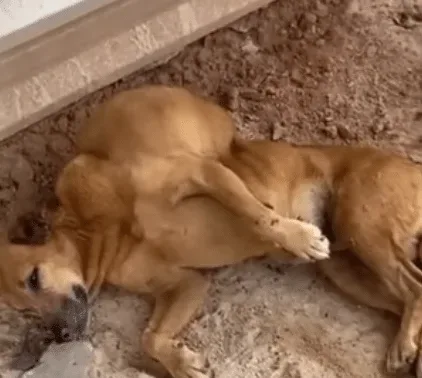
Vitória needed time before she could even try to get up. Her body had been through major surgery, and her balance had changed completely. The leg she once relied on was gone, so her remaining limbs had to bear weight and carry her in a new way.
Her early efforts were uncertain. She pushed upward and searched for a stable position, sometimes holding it for only a few seconds before lowering herself again. Other times she managed a step and stumbled.
Her caregivers stayed close without hurrying her. They offered support when she needed it and made sure the floor gave her enough traction for safer practice. They also accepted that some days she would be too tired to do much. Meanwhile the medical team kept watching the surgical area and looked after her comfort and nutrition.
Progress came through repetition: standing a little longer, taking one controlled step and then another, learning to turn without losing her footing.
As her appetite returned, so did her strength. Vitória began lifting her head when familiar caregivers walked in. Her tail moved more often, and she accepted affection from the people helping her rehabilitate. Difficulties remained, but each attempt showed she was adapting. The dog who had barely stirred beside the bus stop was practicing how to move toward people again.
Routine, Other Dogs and a Few Toys
As Vitória grew stronger, the place where she was being treated began to feel less like a ward and more like a temporary home.
She settled into a routine. Meals came at regular times, caregivers helped her practice moving safely, and she rested on soft blankets. She also spent peaceful stretches outdoors in the sunshine.
The other dogs at the shelter slowly became part of her world. She watched them, rested near them and eventually interacted with more confidence. Toys caught her attention too. At first she only looked at them; later she reached forward and played in the careful way her new balance allowed.
Her posture showed how much had changed. When she was found, she held her body low, every movement shaped by weakness and the weight on her shoulder. Now she stood more steadily, approached familiar people and stretched out in warm spots. She seemed able to rest without the constant discomfort that had followed her before.
The caregivers adapted as well. They adjusted her walking routes, kept surfaces clear and allowed extra time whenever she needed it. Recovery did not mean pretending nothing had changed. It meant building a safe daily life around the dog Vitória had become, one who still sought company and still found ways to enjoy her days on three legs.
Finding a Family for a Three-Legged Dog
As her health and mobility improved, adoption became a realistic possibility. Vitória would need a family who understood her medical history and was ready to support a dog with three legs. That meant regular veterinary care, suitable exercise and a home where unnecessary strain could be avoided.
Eventually someone came forward. According to the account, the woman who adopted her did not see a damaged dog or a burden. She saw an affectionate companion who had come through a remarkable medical ordeal and still welcomed gentle attention.
Their bond grew without pressure. Vitória was allowed to approach at her own pace, while the woman learned how to support her body comfortably and paid attention to the surfaces and routines that made movement easier.
When Vitória finally left for her permanent home, the people who had cared for her felt a mix of emotions. They remembered the quiet dog at the bus stop, the uncertain hours outside the operating room and her first failed attempts to stand. Now she was leaving in the arms of someone committed to protecting her.
What Her Days Look Like Now
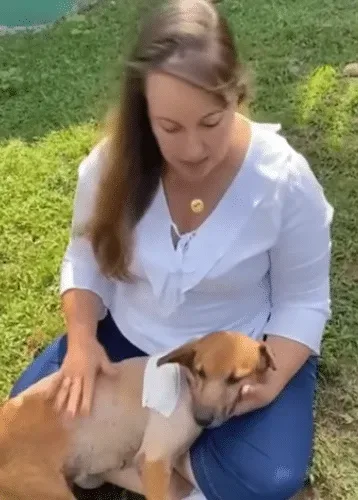
Today Vitória lives surrounded by steadiness and affection. She rests in her adoptive mother’s arms, and a favorite toy is often kept close. She likes warm places to nap and moves through her home with the confidence she built during rehabilitation.
The surgical scar is still there, and so is the absence of her right front leg. Neither keeps her from taking part in the life around her.
Her recovery did not hinge on a single miracle. It was assembled from a chain of practical choices: a stranger who stopped at the bus station, veterinarians who examined a condition with a poor outlook, a rescue team willing to accept the risks of surgery, caregivers who supported every wobbling attempt to walk, and a family that chose to carry that care forward.
Her story does not promise that every medical crisis will end this way. The estimate she was given before surgery, below ten percent, is a reminder of how uncertain it all was. What it does show is how much careful treatment, honest weighing of the risks and a willingness to try can change.
The first sign of what was possible came on the pavement, when she leaned into a stranger’s hand and moved her tail. Today the hands around her belong to people who know her, and the name she was given at the bus stop fits more easily than it once could.