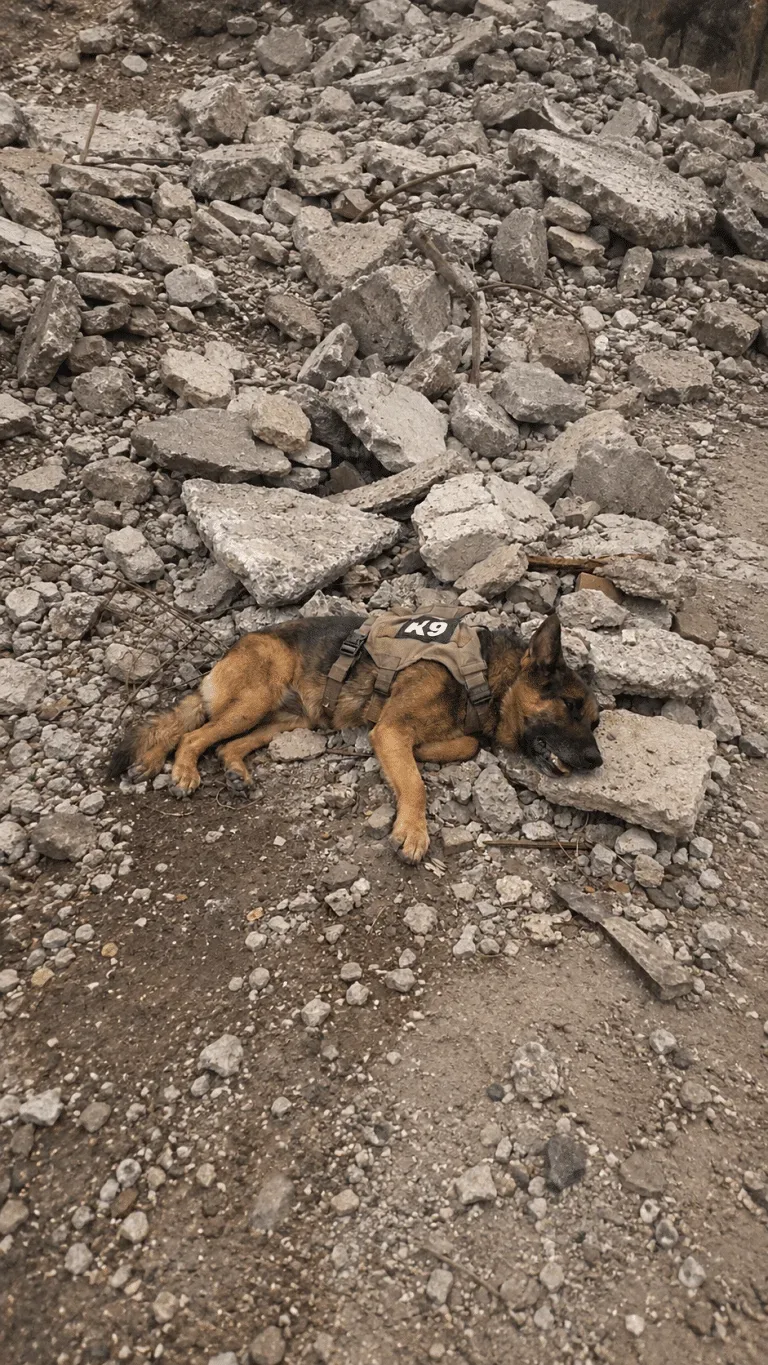
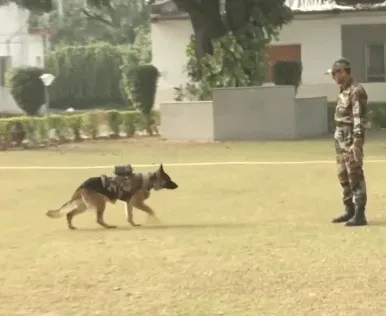
The German Shepherd waits without fuss while soldiers secure a vest around his chest and back.
At a glance, it looks like the protective gear military working dogs have worn for years. A closer look shows what sets it apart. Built into the vest is a compact surveillance system that can send live video and audio to the dog’s handler.
Reports about the demonstration say the equipment was developed for the Indian Army’s Military Dog Unit. The goal is to let soldiers learn what is waiting inside a risky space before a team moves any deeper.
The idea sounds like something from the future. The need behind it is old and practical: better information, and better protection for the dogs and people who work as a pair.
Gear That Looks Ordinary Until You Notice the Lens
Working dogs have worn harnesses and vests during patrol, search, and detection work for a long time, so the vest itself is not the news. What stands out is how much it is asked to do.
According to the reports, it combines two functions. One is protective material meant to lower the risk of injury. The other is a small camera with an audio-transmission system. Footage from the dog’s point of view can reportedly be watched by soldiers who stay farther back.
That changes what a handler can know without stepping forward. A trained dog may be able to move through narrow passages, tunnels, damaged buildings, or poorly lit areas. With a camera on its body, the handler can follow along and watch for obstacles or signs of activity as the dog goes.
The reports do not claim the system removes danger. Its value is more modest and more realistic: it gives a team information before anyone has to decide what to do next.
Video: A Military Dog Tests a Protective Vest With a Live Camera and Audio System
Seeing Through the Dog’s Path in Real Time
The main advantage described in the coverage is speed. Without a camera, a handler may have to wait for the dog to come back, or interpret its behavior, to understand what it found. With live transmission, the handler can watch the surroundings while the task is still unfolding.
The video can reveal the layout of a room. The audio feed may pick up nearby movement or voices. Taken together, the two streams could help soldiers spot hazards, doorways, blockages, and other details that are impossible to see from where they stand.
Lieutenant Colonel V. Kamal Raj, identified in reports as a leader connected with the unit, called the technology a force multiplier. In military terms, that describes equipment that lets a team accomplish more without simply adding more people.
Nothing about the dog’s job is handed over to the device. The animal still works from training and from the handler’s commands. The difference is that the person giving those commands gets a clearer view of what the dog is being sent to check.
What a Few Seconds of Warning Can Change
In a dangerous setting, even a short heads-up is worth having. Spotting something blocking a hallway before stepping into it could change how a team approaches the entrance. Noticing movement inside a building might give soldiers time to reconsider their plan.
That is the reasoning behind mounting a camera on a dog. The animal enters the uncertain space first, and what it picks up travels back to people who are still at a distance.
One caution belongs here. The reports do not describe any particular mission, and the footage shows a demonstration, not an operation. It tells viewers what the equipment is designed to do, not how it has performed under real pressure. Even so, the intended benefit is easy to understand: more knowledge during the earliest and least certain moments, when decisions weigh the most.
Can He Still Sprint, Turn, and Squeeze Through Obstacles?
A vest is only an advantage if the dog can work comfortably in it. Military dogs may need to run, climb, crawl, and pivot quickly. Gear that is heavy or poorly balanced could slow those movements and create a fresh hazard.
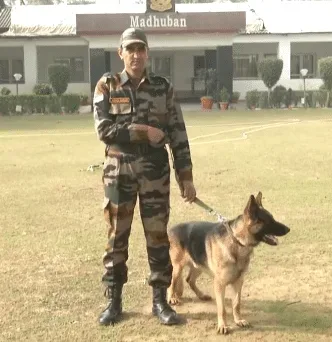
The demonstration seems built to answer that question. Once the vest is secured, the German Shepherd goes through a field exercise carrying both the camera system and the protective panels. He runs across the training ground, changes direction, and works through obstacles. In the footage, the vest does not visibly slide out of position.
The fit appears snug enough to keep everything stable without getting in the way of breathing or motion. Before the exercise, handlers also seem to go over the straps carefully.
That attention matters. Technology has to be fitted to each dog’s size, build, training, and role. A vest that suits one animal may need changes for another, and a dog’s safety depends as much on careful adjustment and monitoring as on the materials in the gear.
What Armor and Cameras Cannot Promise
A live feed may keep soldiers farther from an unknown area in the opening stage of an operation. That same arrangement also underlines something uncomfortable: the dog is the one going in first.
Military working dogs can be used to detect explosives, find people, search enclosed spaces, or check for threats that are unsafe to assess from a distance. Protective equipment can reduce some risks. No vest can make such work completely safe.
People often use the word “bulletproof” loosely when they talk about tactical armor. In reality, protective gear has limits set by its materials, how much of the body it covers, and the standards it was tested against. A vest might resist certain threats without shielding every part of a dog or stopping every kind of projectile.
Those limits are why the equipment should not be seen as permission to put an animal in harm’s way more freely. Its worth lies in adding protection to jobs that trained dogs are already expected to do. Responsible use still depends on planning, veterinary oversight, good training, and an honest look at whether sending a dog in is truly necessary.
The Small Rituals Before the First Step
Some of the most revealing moments in the footage happen before the dog moves. A soldier checks the vest. Straps are tightened or eased. The handler stays close while the German Shepherd waits for direction.
These routines show how much communication has to take place before any gadget becomes useful. A camera cannot tell a dog where to search, and armor cannot stand in for training. The result of any task still rests on the bond between the animal and the person giving commands.
Military working dogs train extensively to stay focused amid noise, crowds, and unpredictable surroundings. They learn to cope with unfamiliar surfaces, sudden sounds, and equipment fastened to their bodies. Handlers, in turn, learn to read subtle signals. A change in posture could suggest the dog has caught an unusual scent, while a pause might point to hesitation or an obstacle.
The camera adds a layer of information, but the handler’s knowledge of the individual dog remains essential. These animals are trained partners working through complicated environments, not remote-controlled machines.
Where Dogs Still Outperform Machines
Armed forces today have access to drones, robots, and an array of sensors. Still, working dogs keep filling roles that machines do not always handle as well.
A dog’s nose can pick up substances at concentrations people would never notice. Its agility lets it move through spaces that might challenge a larger robotic system. It can adjust quickly to changing ground, search around obstacles, and signal a discovery through behavior its handler has been taught to recognize.
Military dogs can help with explosive detection, patrols, tracking, search operations, and locating hidden people or materials. The new camera system does not replace any of those skills. It lets soldiers see them in action more directly.
Rather than relying only on the dog’s return or its reaction, a handler could pair the animal’s natural abilities with video and audio collected during the search. That combination may support better decisions. It also sharpens the duty to keep the dog from harm.
Possible Uses Beyond the Battlefield
Dog-mounted cameras could matter outside military work. Search-and-rescue dogs already enter unstable areas after earthquakes, building collapses, landslides, and other disasters, and in the early hours of an emergency they may reach places people cannot.
A lightweight live camera could let a team see what the dog sees. Rescuers might spot a trapped survivor, judge the state of a damaged room, or recognize a hazard before sending more people into the same space.
Police dogs working in large buildings or rough terrain might eventually use similar systems, provided the equipment suits the job and does not hamper movement. The technology could also help handlers track a dog’s position and condition during long searches.
For now, these are possibilities, not established programs. They hinge on training, cost, reliability, and animal-welfare standards. The equipment would need to be tough enough for harsh conditions yet light, secure, and comfortable for the dog wearing it. A design that ignored those priorities could create more trouble than it solves.
An Old Partnership Wearing New Equipment
The camera and protective vest may draw the eye first, but the system works only because a trained dog is willing and able to operate beside a handler he trusts.
Before the exercise, the German Shepherd stands calmly as soldiers prepare his gear. During it, he follows direction and works the course. Afterward, the handler remains responsible for checking the dog, removing the equipment, and watching for any sign of discomfort or tiredness.
Technology can offer an extra viewpoint, and armor can add a layer of protection. Neither replaces the judgment, care, and communication at the center of a working-dog team.
The demonstration hints at where military equipment may be heading. Cameras could get smaller, protective materials lighter, and live communication faster and more dependable. One obligation will not change: the people who rely on these dogs must also protect them. Dogs enter difficult places because of their training, intelligence, and physical ability, and they deserve gear designed around their safety, not only around the information humans hope to gather.
The dog in this footage may appear to carry technology from tomorrow. Underneath it is one of the oldest partnerships people know: someone giving direction, a dog trusting that person, and the two moving forward together into a place where neither should ever be treated as expendable.