From far across the field, the movement in the grass made little sense. Something was pushing through the bushes, veering left, then right, stumbling over uneven ground as though the path kept shifting under its feet.
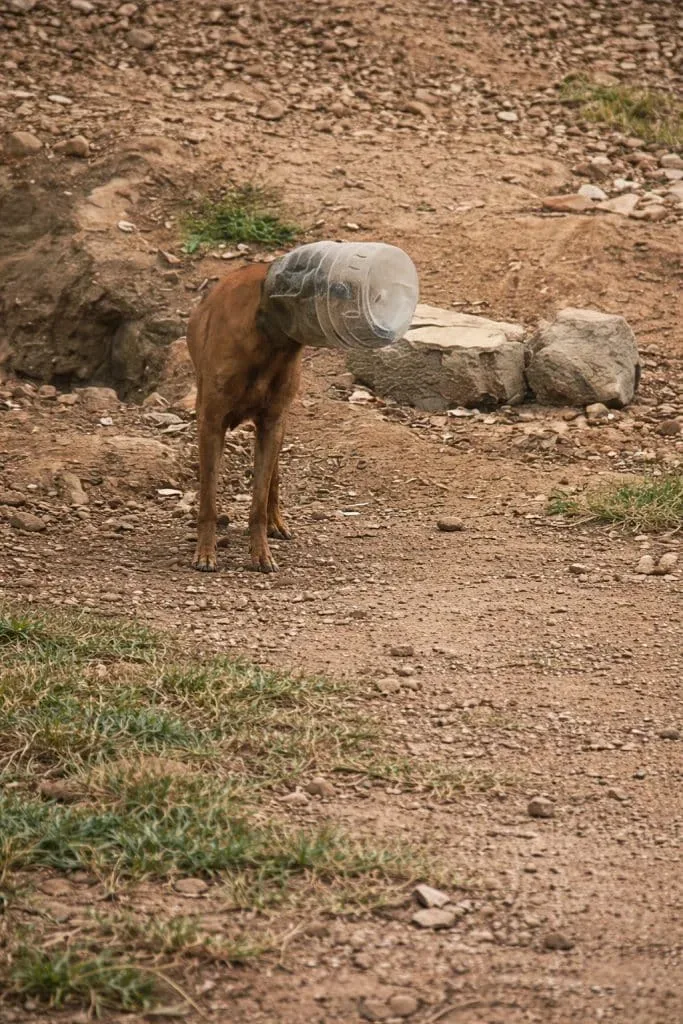
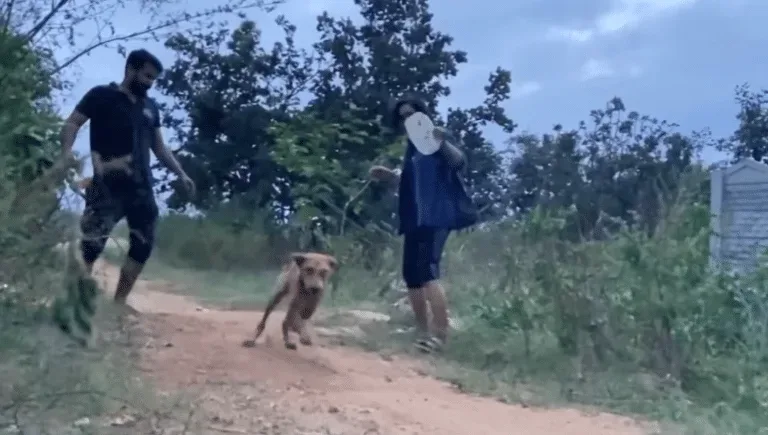
Only when the rescuers got closer did the shape resolve into a stray dog. A large, clear plastic jar was stuck over his whole head.
He could not see where he was heading, and the sounds around him must have reached him as a blur. Each frightened lunge seemed to carry him toward some new hazard.
A Shape Moving Wrong Through the Tall Grass
The transparent container covered the dog’s head completely. Some light came through the plastic, but his view was badly distorted. Branches seemed to appear from nowhere, and tall grass hid the holes beneath his paws. Even his own breathing and barking echoed back at him inside the jar.
When he sensed the rescuers nearby, nothing in his reaction suggested he understood they had come to help. He bolted.
Video: A Stray Dog With a Plastic Jar on His Head Runs From the People Trying to Reach Him
Why Losing Sight Is So Dangerous for a Stray
For any dog living outdoors, clear vision matters a great deal. Finding food and water gets harder, and roads, fences and other hazards are much more difficult to avoid.
This dog kept moving anyway. But every step looked uncertain, and a dog who cannot see may run into trouble far faster than one who can. That was the concern shaping everything the rescue team did next.
Following Him Instead of Chasing Him
The team trailed the dog across the fields. Whenever they came too close, he panicked and vanished into the vegetation. He crossed rough ground, shoved through bushes, and even made it over a narrow ditch, the jar still firmly in place.
The rescuers recognized the risk of a full-speed chase. A frightened dog who cannot see might run toward traffic, tumble into deeper water, or hurt himself trying to escape. So they chose a quieter plan. They stayed near enough to keep him in sight, and far enough back that they would not add to his fear.
It was no longer a quick rescue. It had become a test of patience, and time was not entirely on their side. The dog was already tired. His movements grew less steady, and each burst of panic used up strength he could not easily replace.
An Inch-by-Inch Approach That Nearly Worked
After a long pursuit, the dog slowed and stopped in a patch of grass, breathing heavily. To the rescuers, it looked like the best opening they had been given.
One team member lowered himself to the ground and began to crawl forward, moving only a few inches at a time. Every motion was deliberate, since a sudden noise or a snapped branch could send the dog running again. For several moments, the plan seemed to be working. The dog stayed put, and the gap between them kept shrinking.
Then he sensed someone close by, jumped up and disappeared into the field once more.
The rescuers did not show frustration. They treated his flight for what it was: the reaction of an animal who could not see what was approaching. He was not refusing help. He simply had no way of recognizing it. The team stood up, regrouped and went after him again.
The Moment Exhaustion Opened the Door
In the end, it was the dog’s fatigue that gave the team its chance. He slowed enough for one rescuer to cover the last stretch of ground. The man reached out and secured him before he could bolt again, and the dog twisted and struggled, startled by the sudden contact.
The rest of the team moved in quickly. They supported his body and legs so he could not injure himself while thrashing, and they kept their voices calm around him, even though he could not yet know the ordeal was nearly over.
Turn, Pause, Pull: Getting the Jar Off
Holding him was only part of the problem. The jar sat tightly around his ears and jaw, and it could not simply be yanked away.
The rescuers adjusted their grip and worked slowly. They gave the jar a slight turn, then a careful pull. Whenever the dog grew frightened, they paused, then tried another adjustment. Bit by bit, the plastic began to shift.
At last it slipped free.
After an unknown number of hours, or possibly longer, the dog could see clearly again. The grass, the open sky and the people around him were all suddenly in plain view, and the muffled world inside the plastic was gone.
A Sprint That Looked Like Relief
Once the rescuers were satisfied the dog was unharmed, they let him go. He stayed motionless for a brief moment. Then he ran.
He did not walk over to the people who had freed him, wag his tail or linger for affection. He simply raced across the field.
The difference was easy to see, though. This time he was not blundering blindly through the brush. He steered around the bushes, crossed the ground with ease and went wherever he chose. His dash away from the team was not a rejection of them. It looked a lot more like relief.
Later, the dog was spotted moving normally among other strays beneath the evening sky. He was still living outdoors, and nothing in the account points to a new home or a veterinary visit. But the immediate danger had passed, and the jar no longer decided where he could go.
The Jar That Was Crushed Before the Team Left
Before leaving, the rescuers picked up the discarded container. They believed the dog had probably caught the scent of food inside and pushed his head through the narrow opening while searching for something to eat. Once the jar slid over his ears, there was no easy way to pull it back off.
They then crushed it underfoot rather than tossing it aside. It was a small act, but it carried a clear message.
Plastic jars, bottles, cups, food containers and metal cans can all become traps for stray animals and wildlife. Leftover smells draw in hungry animals, and narrow openings can hold their heads in place. Once trapped, an animal may be unable to see, eat, drink or defend itself.
Flattening containers before throwing them away takes only seconds. So does cutting open narrow plastic rings. Those few seconds may spare another animal a frightening ordeal.
This rescue did not succeed on the first attempt, or on the second. The dog ran into bushes, crossed difficult ground and slipped away when help was only a few feet from him. The team did not mistake terror for aggression, and they did not force the situation when that might have put him in greater danger. They adjusted, waited and acted carefully when the right moment arrived.
The dog may never know why strangers followed him across the fields. But the moment the plastic came away, the echoes stopped and the world came back into focus. For this stray, help arrived in time. The next animal might be protected much sooner, simply because someone crushed a container before throwing it away.