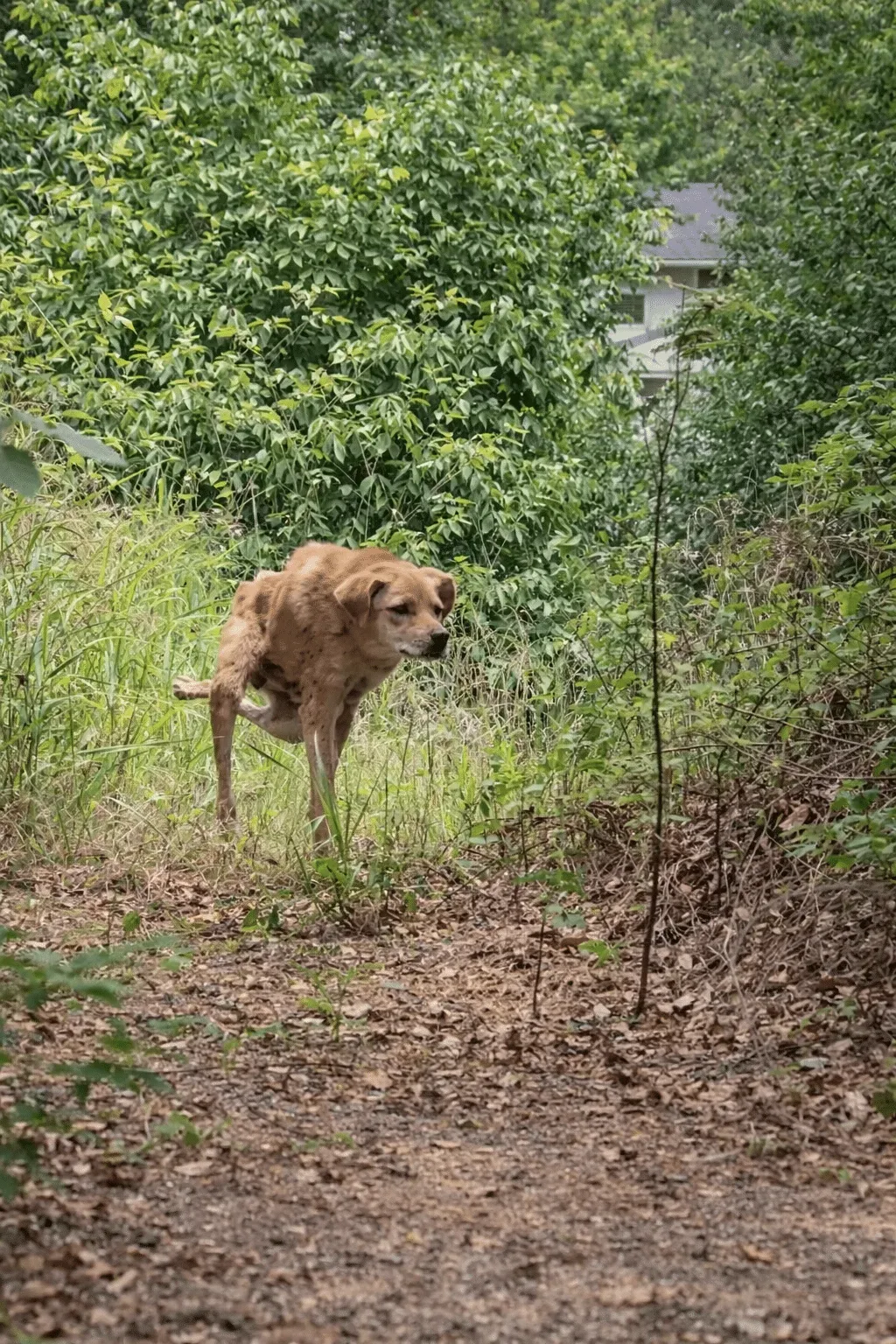
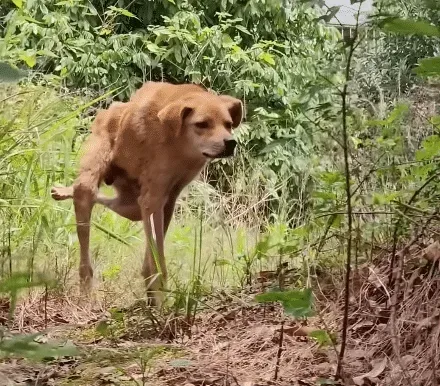
In the opening scenes of the video, a thin stray dog moves through dense bushes using only his front legs. His hind legs are paralyzed, and they drag behind him with every pull forward.
His ribs show through sparse fur. His eyes keep darting around, alert even as he struggles ahead. Whatever he eats, he scavenges, in a place that offers him neither shelter nor safety.
Then, one afternoon, someone noticed him.
A Walker Who Did Not Keep Going
A man in a white shirt spotted the dog among the bushes. Other people may have passed the same spot before him, but this time the walker stopped.
He slowed his steps and approached gently, with no sudden movements and no raised voice. He set down food, then water, and left the dog room to decide what to do.
The dog hesitated. Fear seemed to have guarded him for a long time. Gradually, hunger and exhaustion loosened its hold, and a fragile trust began to form between the two.
Video: A Paralyzed Stray’s Slow Path From the Brush to a Second Chance
The Decision to Take Him Home
Once the dog had accepted that help, the man made his choice: he would not leave him there.
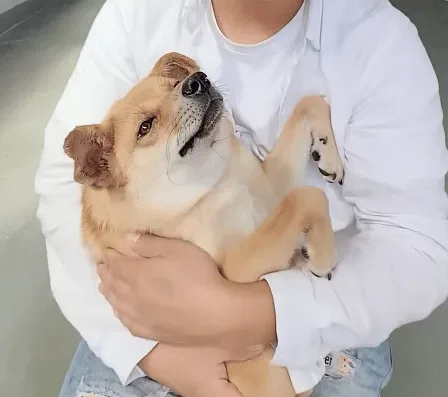
He lifted the dog carefully into his arms and carried him home. From that point, the dog’s days stopped being about getting through the next hour and started being about being looked after.
A Clinic Visit and a Clear Prognosis
At the clinic, the dog was examined from head to tail. The veterinarian assessed his paralyzed back legs, cleaned his wounds, and checked his general health.
The diagnosis was plain: his hind legs would not regain movement.
Still, a great deal could be done. He was treated for infections. Regular, nourishing meals replaced scraps, and a clean bed replaced bare dirt and rain-soaked ground.
He was bathed in warm water, eating on a steady schedule, and, as the footage suggests, beginning to sleep without reacting to every noise. Small routines like these started restoring more than his body.
Weeks That Changed How He Looked and Moved
As the weeks went by, the difference became hard to miss. His dull coat turned soft and glossy. His thin frame filled out, and the wariness in his eyes gave way to a brighter look.
He still moved with only his front legs, but he adapted. His upper body grew stronger, his balance improved, and he could push himself forward with surprising speed.
He glided along paved walkways and explored open grass. His movement now looked purposeful rather than desperate.
Care did not undo his paralysis. What it changed was the way he lives with it.
A Shiba Inu, Gentle Hands, and a Swim
The closing scenes look very different from the opening ones. The dog is no longer alone.
He plays beside a lively Shiba Inu, tail wagging, and the two race side by side in friendly competition. His movements look confident and smooth.
His owner often kneels next to him, offering soft praise and gentle touches. In one especially memorable scene, the dog swims with ease. Running may work differently for him, but in the water he seems to move freely.
What Changed, and What Did Not
This is not a story about reversing paralysis. His hind legs are not expected to recover, and the video does not explain how he came to be paralyzed.
It is a story about what a life can hold anyway: routine, companionship, and play. A dog who once crawled unnoticed through tangled brush now has meals, a bed, a friend to race, and someone who kneels down beside him.
It began with one person who chose to stop, keep his voice low, and offer food and water. The dog’s condition stayed the same. His life did not.