She moved so slowly that it was easy to miss what was wrong.
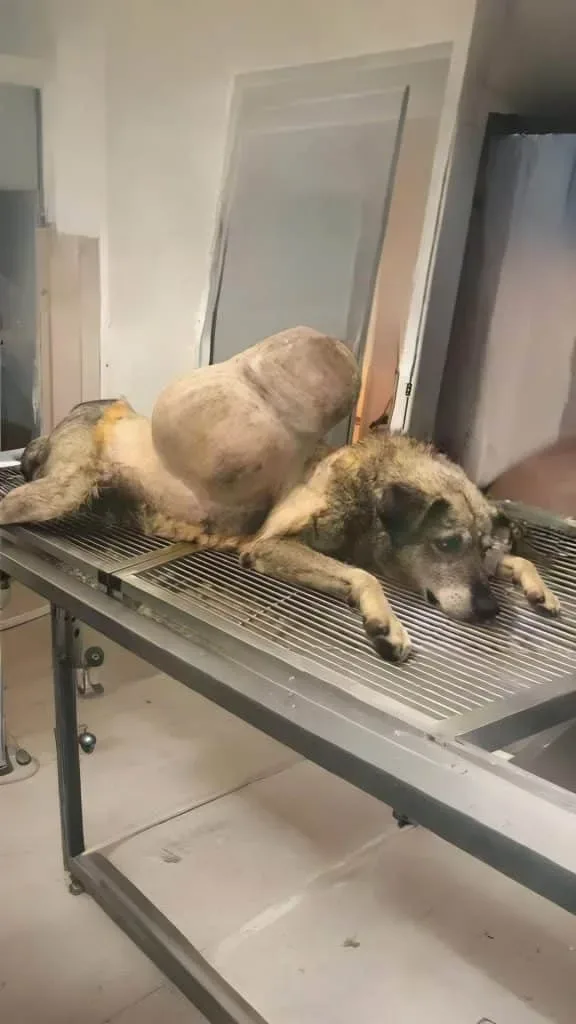
A small, thin dog was making her way along a country road, placing each paw as though she had to think before committing to it. Rising from her back was a large swelling, a weight that her worn-down body had no spare strength to carry.
She had no visible destination. She simply kept going. The people who spotted her understood that she could not continue this way for long, and that getting her to safety would take far more patience than speed.
The Dog Who Walked Like She Was Counting Her Steps
When the rescue team reached the area, the dog was still moving along the road. She was underweight and clearly tired, and the mass across her back changed the way she held herself. Its size suggested it had not appeared overnight, though how long she had lived with it was not known.
The team called her Bunica, a word meaning “grandmother.” It was not a comment on her age. The name came from the calm, gentle way she watched the people around her.
She did not bark or lunge. When someone came too close, she simply moved off and kept her distance. That one habit shaped the entire rescue.
Video: Bunica Walks Slowly Along the Road While the Rescue Team Works to Earn Her Trust
Rescuers Sit Down and Let the Afternoon Pass
Chasing a frightened, weakened dog could have made everything harder, so the rescuers did the opposite. They sat down, set out food and waited.
Her caution showed in small ways. If someone stepped toward her, she stepped back. If a hand reached out, she widened the gap again. There was no frantic escape, only a steady insistence on staying out of reach.
The team stayed through the heat of the day. They spoke softly and placed small pieces of food on the ground, leaving the choice of distance to her. Slowly, the pattern shifted. She stopped backing away each time someone moved and began to watch them instead. The food drew her a little closer, and curiosity appeared to do the rest.
A Sedative, a Carrier and the Road to the Clinic
Trust was only part of the problem. Bunica needed a veterinarian, and with a mass that large, waiting much longer was not an option.
To keep the moment as safe and stress-free as possible, the team gave her a mild sedative and then lifted her carefully into a carrier. The dog who had held her ground all afternoon was finally on her way to be examined.
Strength First, Surgery Later
At the clinic, the veterinary exam confirmed that the swelling was substantial. It had stretched the skin around it and put a heavy load on her small frame.
Her low body weight raised a second concern. Even if an operation was the best way to remove the mass, she first had to be strong enough to survive one. So the team held off on surgery and focused on more basic needs:
- Nutrition
- Hydration
- Rest
- A clean, comfortable place to stay
For the first several days, the goal was simply to help her stabilize and build up reserves for whatever came next.
The Meals That Kept Arriving
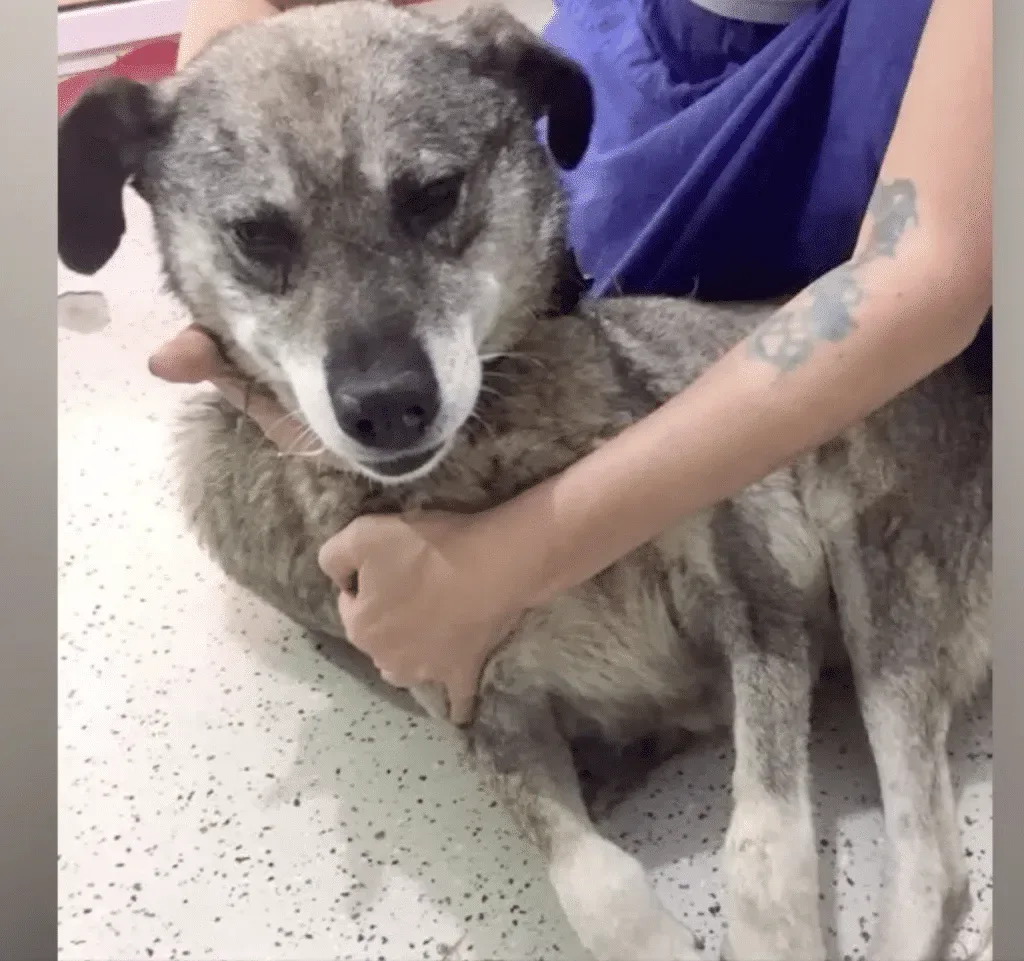
Her progress began quietly. Bunica accepted food, and before long she was taking it from hands she had come to recognize. She allowed gentle contact. She rested in a clean bed instead of searching for the next place to lie down.
Those routines mattered in themselves. Meals came when expected, water stayed within reach and the same caregivers returned. Her body responded to the steadier care, and she gained enough strength for the veterinarians to reconsider an operation.
The mass had not changed. But Bunica was now in a much better position to face it.
Surgery and a Welcome Test Result
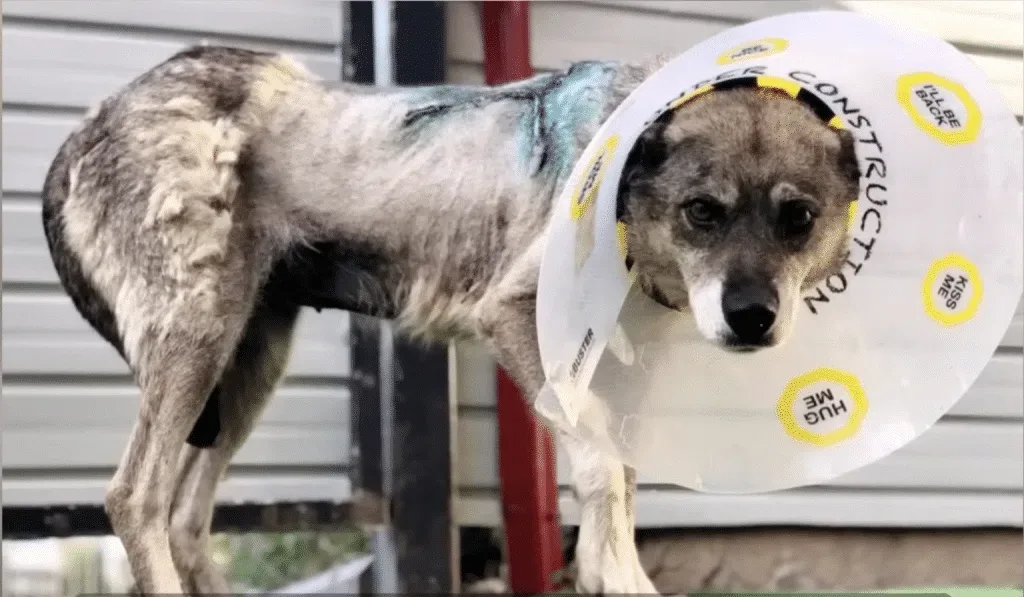
Once the veterinarians judged her stable enough, surgery was scheduled. The aim was to remove the large mass while protecting the surrounding tissue, giving her body the best chance to heal afterward.
The procedure was completed successfully. Testing then indicated that the tumor was benign, news that brought deep relief to the people who had watched her struggle beneath it.
Recovery was not immediate. She still needed rest, and the surgical area needed time to heal. Even so, something was plainly different. She was carrying far less.
Walking Again, Without the Weight
As the days went by, Bunica became more active. With nothing pulling across her back, her posture began to improve, her steps grew steadier and she appeared to move with more comfort.
Caregivers soon started taking her on gentle walks. She explored at her own pace, pausing in the grass and lifting her head toward the air. She showed more interest in her surroundings, rather than simply pushing on down a road with nowhere to go.
These were ordinary moments, yet next to the image of a dog laboring along an empty road, they marked a real change. The goal was never to transform her overnight. It was to remove what was hurting her and give her enough safety to find out how life felt without it.
What Is Known About Bunica’s Future
Today, Bunica is no longer traveling alone with a heavy mass on her back. People are monitoring her health, and she has regular meals, comfortable places to sleep and time to recover.
The account does not say where she will eventually settle, so her long-term future remains open. What is documented is the change in her daily life: routine has replaced the road, and that routine has given her body room to mend.
A Second Look on a Quiet Road
Nothing about her discovery was dramatic. No crowd gathered, and no one cried out for help. There was only a small dog moving unusually slowly along an empty stretch of road.
Someone noticed her. Then someone looked again, and that second look revealed what she was carrying.
What followed was unhurried: people who sat down rather than giving chase, food offered in place of pressure, and medical care instead of another day of walking. Bunica had kept going for as long as she could. In the end, she met people who made sure she could stop.