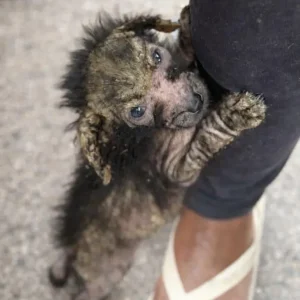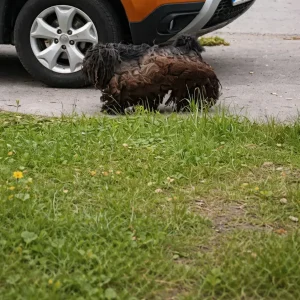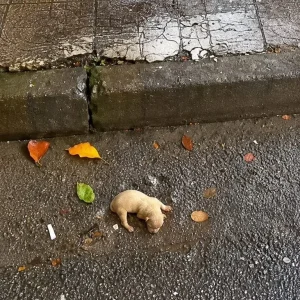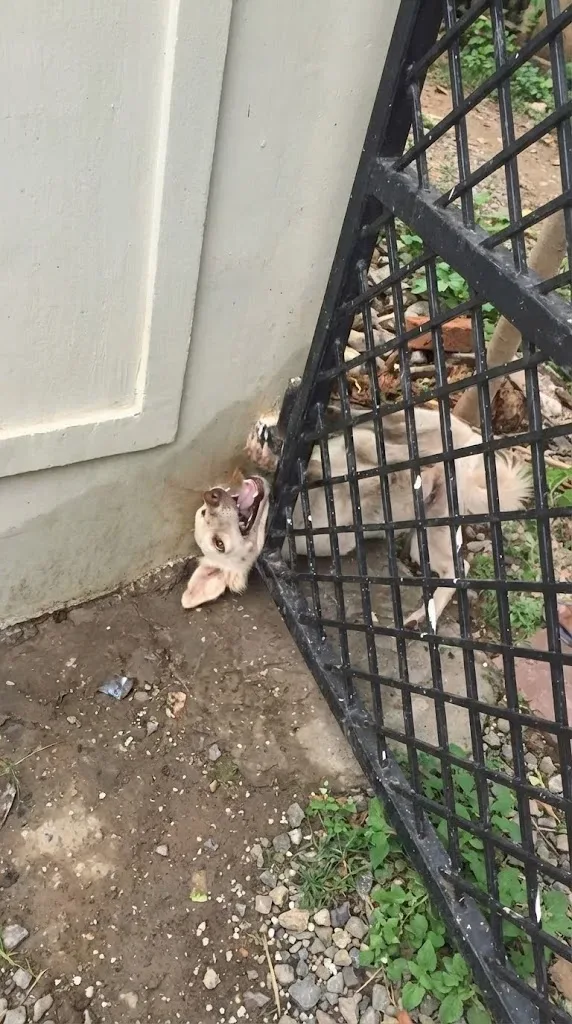
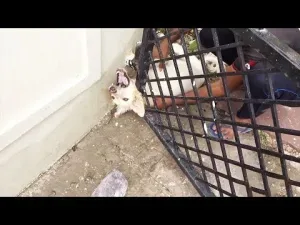
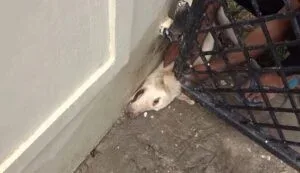
Cars passed within a few feet of him. Footsteps crossed the pavement, and conversations carried on as if it were any other day. A dog lay caught in materials wrapped tightly around his body, and for hours, no one came.
The account of this rescue does not give the dog’s name or say where it happened. What it does describe is a long stretch of being heard but not answered, followed by a handful of people who chose to look closer. That choice is the heart of the story, and it is the reason the story kept spreading online.
Tangled Where Everyone Could See
According to the account, the dog could not free himself. The materials around his body seemed to tighten whenever he moved, so each attempt to get loose only made his situation harder. The source does not say what the materials were or how he became entangled, so those details remain unknown.
He was not hidden away in some remote corner. He lay where people walked and drove. No alarm sounded and no crowd gathered. There was one frightened animal in a place that simply kept moving around him.
For hours, he cried out. The account describes the sound as a steady call for help, not as aggression. Still, nobody answered.
Video: A Trapped Dog’s Long Wait for Help, and the People Who Finally Noticed
Close Enough to Hear, Yet Unanswered
For many people who later learned about the ordeal, the hardest part was the distance, or rather the lack of it. Cars went by within feet. People talked within earshot. Nothing in the account suggests that anyone who passed meant the dog harm. The pain came from the gap between a cry and a response.
When the story reached the internet, it did not travel because it was shocking. It traveled because it raised an uncomfortable question. How can a living creature go so long without help in a place so full of people? The question was less about blame than about how easily attention drifts away when daily routines take over.
A Cry That Did Not Stop
As the hours passed, the dog kept calling. That persistence is what stayed with viewers. Some described it as quiet endurance, a continued reaching toward help even when none arrived. That reading is an interpretation, because no one can know what the dog was thinking. What the account actually documents is simpler. He did not stop crying out.
For some readers, that one detail changed how they thought about the animals around them. They began to wonder how many other struggles go unnoticed because they blend into the background of an ordinary day.
The Decision to Pause
Eventually, someone did stop. A few people chose to look more closely instead of walking past. The source does not say who they were or how they worked. It says only that they acted, and that the dog was freed and lifted from the ground.
The account places the real turning point in that decision to pause. The dog was no longer overlooked. After hours of calling, someone had listened.
Why the Story Crossed Borders
The reaction, as described, was thoughtful rather than angry. As the story moved from country to country, people shared their own admissions. Some had assumed someone else would step in. Others had ignored a quiet warning in their gut. The dog’s experience showed how thin the line can be between a tragedy and a rescue.
Animal welfare advocates pointed to a broader lesson. Suffering often happens in full view, and what is missing is not ability but attention. Compassion, they noted, does not require authority or special expertise. It can begin with noticing that something is wrong and taking a moment to check.
Parents used the story to talk with their children about empathy. Educators used it to discuss responsibility beyond oneself. Some people who had never given much thought to animal welfare said they began paying closer attention to the world around them.
What Is Known About His Life Now
The account says the dog’s life now looks very different. Surrounded by patience and gentle hands, he is learning what safety feels like again. It gives no details about his medical care, his caregivers or any permanent home, so his longer-term future is not established.
What the story leaves behind is less about the ordeal than about the pause that ended it. Change did not begin with a grand gesture. It began when a few people heard a cry they could have kept walking past, and stopped to answer it.