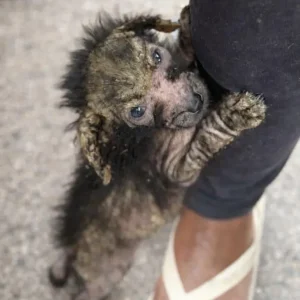
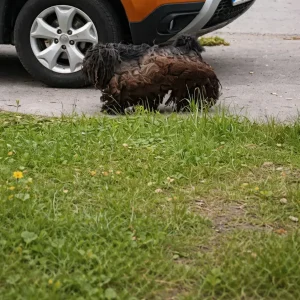
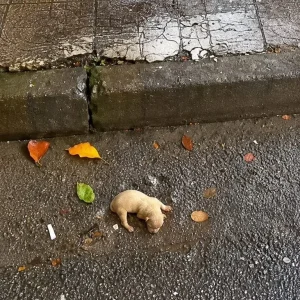
It looked like a bundle of dirty cloth left at the edge of the road. A truck driver, near the end of a long trip, almost drove past it. There was no face, no paws and no outline that suggested a living animal.
Then the bundle moved. The movement was slight, but it was enough to make him slow down and look again.
Under the thick, tangled fur was a small dog. Rescuers would later call him Ares. How much of him had been hidden, and how long it would take for him to be seen again, only became clear over the weeks that followed.
The Heap That Shifted at the Roadside
As the driver came closer, Ares stayed where he was. He did not run, bark or growl. He simply watched, using the narrow gaps in the mats that had formed across his face.
His coat was badly knotted and packed with dirt and debris. Heavy clumps hung around his legs and belly, and the fur over his eyes limited what he could see. The natural shape of his body had nearly disappeared. From a distance, he could easily have been mistaken for something thrown away.
Up close, other details stood out. He seemed exhausted and underweight. He was alert enough to follow movement nearby, but he showed little energy for anything more.
The account does not say where Ares came from or how long he had been outdoors. What it does make clear is that, on that day, someone noticed him.
Video: Watch a Matted Dog Named Ares Get Freed From His Tangled Coat
Lifted Away From the Edge of the Road
The driver did not keep walking. Ares was picked up carefully from the roadside and taken to a safe place, which began a recovery that would come in small steps rather than one dramatic moment.
The early days did not look like a triumph. They looked like a tired dog being handled slowly, fed regularly and watched closely by people who did not yet know his history.
At the shelter, the team turned to the problem that had hidden him in the first place: his coat.
A Coat That Could Not Be Brushed Out
A brush was out of the question. The fur had twisted into dense mats that sat tight against his body, and pulling at them risked hurting him or injuring the sensitive skin underneath.
The mats were more than a cosmetic problem. They covered his eyes, wrapped around his legs and concealed his skin, so the team could not judge his condition until the coat was dealt with.
The only option was to trim the fur away with care. The rescuers worked in sections, moving around his face, legs, chest and belly. They paused often to check his skin and to make sure the process was not becoming too much for him.
Ares stayed mostly still. That made the work easier, but the caregivers did not take his quiet as a sign of comfort. Exhaustion can make a frightened animal look unusually calm, so they kept their pace slow.
The Dog Underneath Was Smaller Than Anyone Expected
As the first mats fell away, his face began to appear. His nose came into view, then the shape of his ears. Once the fur over his eyes was cleared, the people caring for him could see his whole expression.
Every cleared patch revealed something new. His face, legs and belly had all been hidden, so the real size of the dog emerged only gradually.
He turned out to be smaller and thinner than anyone had guessed. His skin looked sensitive, and parasites were found in places the mats had covered. Those problems called for cleaning, treatment and continued observation.
Still, the heaviest burden was gone. Ares could see more clearly, and his legs were no longer weighed down by clumps of fur. The small dog who had almost vanished beside the road was visible again.
A Bowl He Studied Before He Touched It
Once he was clean and settled in a quiet resting area, caregivers placed food within his reach. Ares did not go straight to it. He watched the bowl, apparently unsure about moving toward it while people were nearby.
No one pushed the bowl closer or tried to hand-feed him. The caregivers stepped back and gave him time.
Eventually he leaned in and sniffed. Then he took one small bite and paused to look around the room. When nothing alarming happened, he ate again.
That meal did not make him a confident dog, but it started a routine he could rely on. Food came every day. Fresh water was always available. The same caregivers returned without asking for anything in return.
By day 12, Ares was eating consistently. With steady nourishment, his body could begin rebuilding strength. His posture gradually improved, and he grew more responsive when familiar people entered the room.
Day 18: The First Wag
There was no single breakthrough in his progress. It showed up in small changes. He lifted his head at the sound of familiar footsteps. He let people stay closer instead of watching only from a distance. He accepted gentle touch without immediately turning away.
Then, around the eighteenth day, his tail moved. The wag was brief, and it would have been easy to miss. The caregivers saw it.
Ares repeated the gesture when a familiar person approached, a sign that he was beginning to link certain voices and footsteps with food and calm handling. Soon he began following caregivers for short stretches, staying several steps behind. If someone turned too quickly, he stopped. But the gap between them narrowed a little more each day.
Nothing about this was forced. No one chased him or pressed him to interact. Each approach was followed by something predictable: a meal, a gentle touch, a few quiet minutes of company. That routine became as much a part of his recovery as the grooming and treatment. Trust seemed to grow through repetition, one peaceful day after another.
Fifty Days Later, a Soft Golden Coat
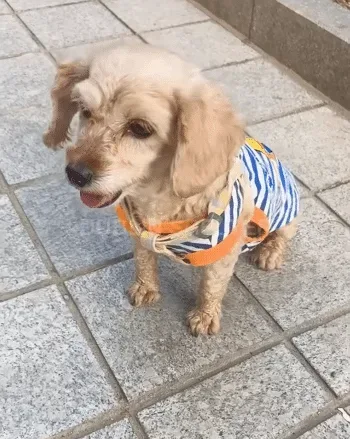
By day 50, Ares looked nothing like the tangled shape found at the roadside. Regular meals had filled out his body, and his skin had improved with treatment. His coat was growing back clean, soft and golden.
His eyes were fully visible now, and they followed activity around the shelter with interest. His expression looked brighter and more alert.
The biggest change was in how he moved. Ares no longer stayed in one protected corner. He walked through familiar areas with confidence, went to the people he trusted, and explored without stopping every few steps as if searching for somewhere to hide.
He had not become a different dog. Recovery had simply allowed the personality beneath the exhaustion to show. Ares was curious and enjoyed company, and when he felt safe, he showed a playful energy that had been impossible to see in his first days in care.
A Family That Didn’t Hurry Him, and a Love of Water
Ares was eventually adopted. His new family understood that yet another unfamiliar place might take patience, so they let him learn the household routines without expecting him to feel at ease right away.
A new home meant new sounds, smells and rooms. The account does not describe his first nights there, but it does describe a household that chose not to rush him.
Meals arrived at predictable times. He had soft places to sleep and was left undisturbed. Walks introduced him to his surroundings in small, manageable steps.
Over the following days, Ares began treating the home as his own. One of his biggest discoveries was water.
The dog who had once picked his way carefully beside the road became lively whenever he could splash and play. He ran into shallow water without the hesitation that had marked so many of his early movements, chased the ripples, lifted his paws high and came back again as though every visit were brand new.
It is an ordinary kind of joy. Yet for those who remembered the silent bundle beneath the mats, watching him run freely carried real meaning.
What a Second Look Made Possible
Ares’ story began with a small decision. A truck driver saw an odd shape, slowed down and looked again. Then he stopped.
That choice led to grooming, medical care, regular meals and weeks of patient recovery. It eventually led Ares to a family of his own and to experiences that would have been out of reach while he stayed buried under the mats.
For a while, nobody could see his eyes. The mats covered his face and nearly every sign of the dog beneath them. But Ares was there the whole time, and what he needed was not a new life made from nothing. He needed someone to notice the one that already existed.
One person looked past the surface, and because of that, Ares stepped out of hiding and into a world where he can be seen every day.