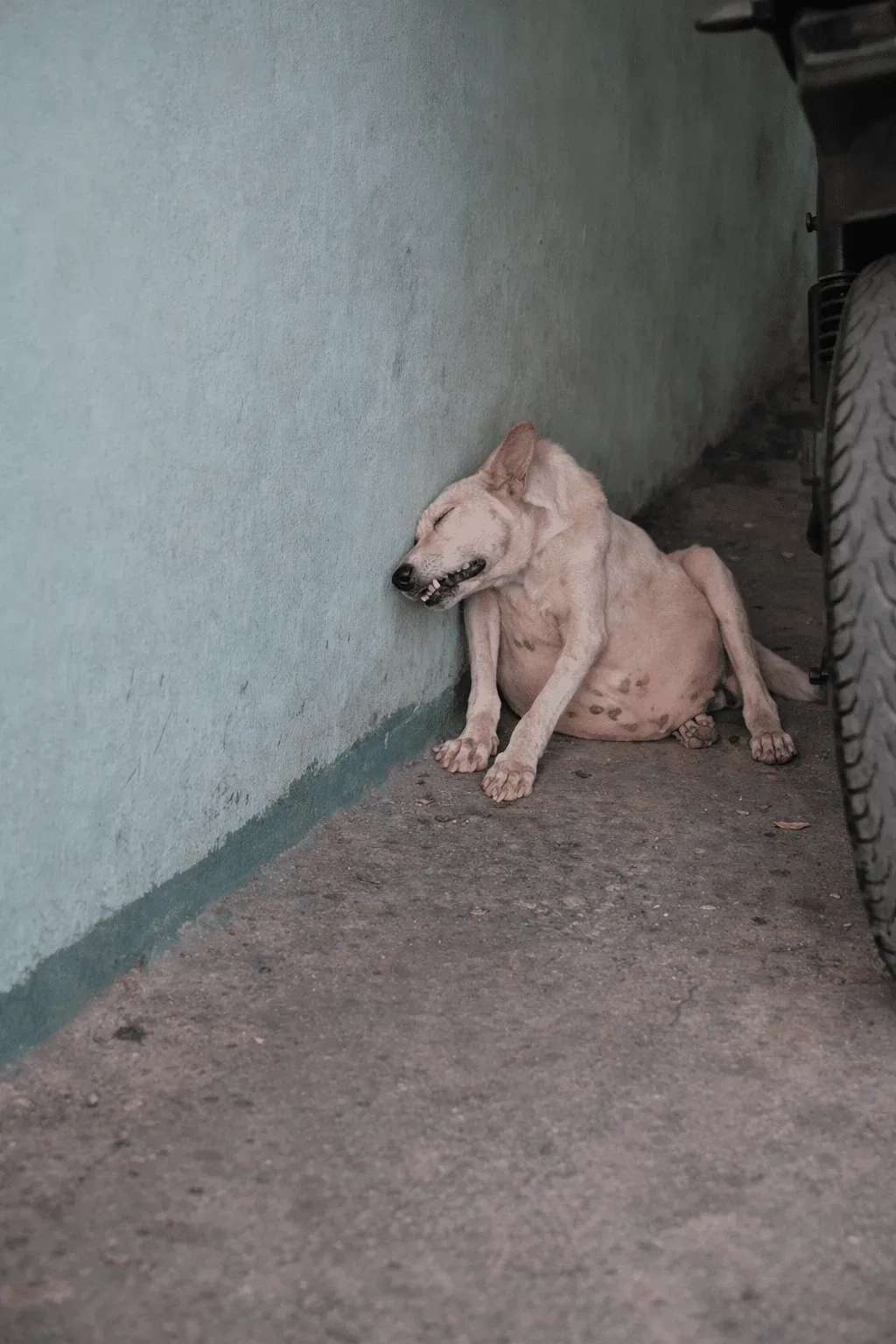
A dog with a round, tight belly, crying alone in a quiet corner. Most people would have drawn the same conclusion: she must be about to give birth.
The dog later named Leila did not behave like an expectant mother, though. She looked like an animal in trouble, and whoever saw her first had to decide whether to keep walking.
The Dog Crying Among the Bicycles
On October 4, in Brazil, Leila was found in a bicycle parking area. Nobody would expect to find an animal in distress there. She wasn’t resting or waiting for anyone. She was crying.
Her abdomen was dramatically swollen, which made the pregnancy theory easy to accept. Her behavior didn’t fit it. She kept shifting position as if she couldn’t get comfortable, and her breathing looked heavy.
A security guard picked up on the mismatch. He could have passed by, as others might have. Instead he stayed a little longer and watched her. Then he made a phone call, and that call set her rescue in motion.
Video: Leila’s Swollen Belly, Her Surgery and Her First Steps Afterward
A Diagnosis That Overturned the Obvious Guess
At the veterinary clinic, the pregnancy assumption fell apart. Leila was not expecting puppies. She had ascites, a dangerous buildup of fluid inside the abdominal cavity.
The swelling was pressure, not new life. The fluid was pressing on her organs and made movement painful. The account doesn’t say how long it had been building or what caused it.
She was given pain relief first. Within minutes her body seemed to soften and the tension left her face. She lay still, resting rather than frozen by discomfort, and some viewers said she looked as if she were smiling.
Comfort alone wasn’t enough. Leila needed surgery.
Easing the Pressure, Step by Step
The veterinary team worked to manage the fluid while also investigating what lay behind it. The procedure called for care in both directions. Moving too fast could put her system under shock, and moving too slowly would prolong the strain on her body.
The team proceeded in measured stages. The source doesn’t name the underlying cause they were investigating, and it doesn’t describe the operation in detail. What it does make clear is that the approach worked.
When Leila woke up, the dramatic swelling was gone. Her body no longer looked stretched to its limit, and the tightness that had marked her posture had disappeared.
Finding Her Footing Again
Recovery didn’t happen all at once. Leila had grown used to carrying that internal weight, and without it even standing seemed unfamiliar. Her first steps were hesitant and cautious.
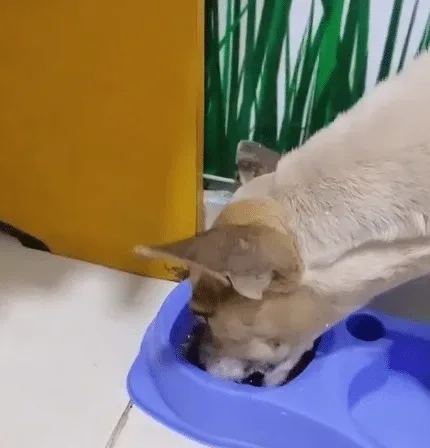
She kept trying, and her movements grew steadier each day. Her appetite returned quickly, and she ate eagerly as her strength came back.
Then smaller changes appeared. Her tail began to wag. She started seeking attention from the people around her, approaching with curiosity rather than desperation. She seemed to be looking for company now, not a way out.
The Dog in the Final Footage
By the end of the video, Leila looks very different from the dog found among the parked bicycles. Her body appears balanced, and her eyes are clear and bright.
She now sleeps on a soft bed and eats full meals. When she cries, someone responds.
The account doesn’t say where Leila lives now or whether she has been adopted, so her current home remains unknown. What the footage does show is a dog moving from pain toward safety.
What Made the Difference
Leila’s story doesn’t hinge on dramatic heroics. It hinges on timing.
A security guard chose not to settle for the easy explanation. A veterinary team then acted quickly on a condition that could have become fatal if no one had noticed it.
Sometimes the most important step is the simplest one: noticing when something doesn’t fit, and making the call.