Behind a small house stood a metal cage that had gone uncleaned for years. The smell had become so familiar to the neighbors that few noticed it anymore.
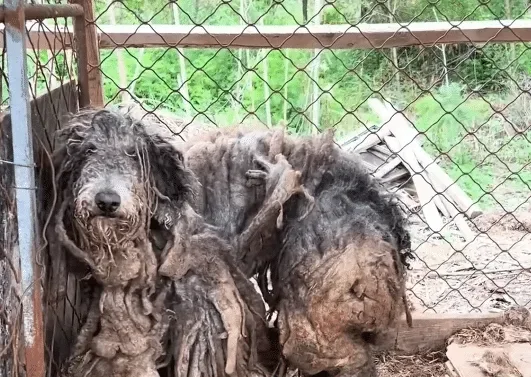
A large dog lived inside, and he rarely felt grass under his paws. When rescuers were finally called, they could not tell at first what kind of animal they were looking at.
Making sense of his condition would take hours of careful work. Repairing it would take months.
A Cage Nobody Had Cleaned in Years
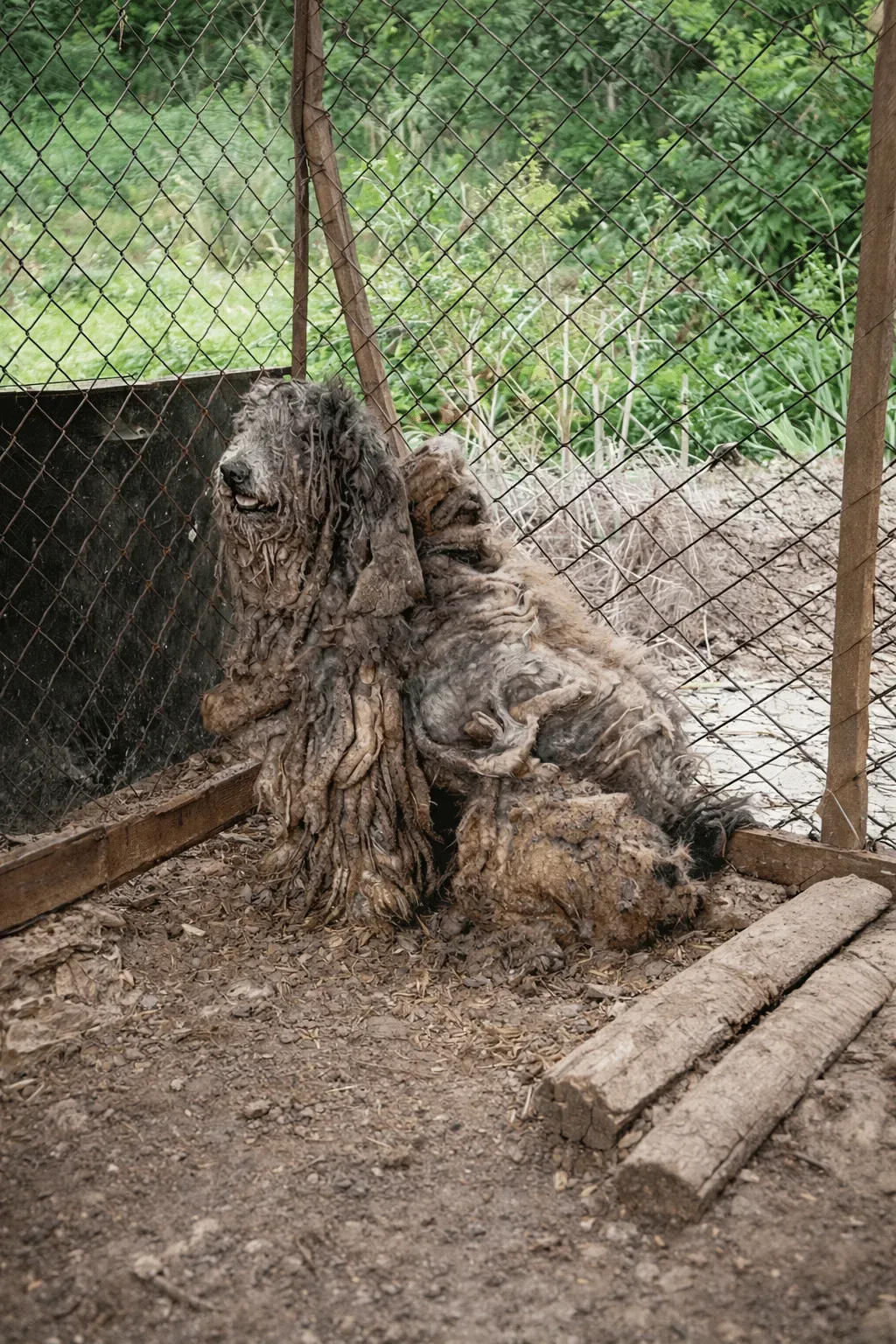
According to the rescue account, the dog belonged to an elderly man known locally for heavy drinking. The man kept him confined almost all the time. Meals came irregularly, clean water was never certain, and the cage floor was layered with filth.
What the rescuers saw inside looked less like a dog than a heap of hardened fur. Thick, twisted mats hung over a very thin frame. Dirt, moisture and infection had been trapped under that coat for a long time.
Through the tangle, though, two eyes followed the visitors. They did not look hostile or defensive. They looked uncertain.
Video: A Giant Poodle’s Rescue and Recovery After Years in a Cage
The Dog Who Stayed Put When the Door Opened
He did not bark as strangers came closer. He did not growl when they touched the bars. When the door finally swung open, he did not rush out.
He simply stayed where he was. As grim as the cage was, it seemed to be the only place he knew.
The rescuer did not pull or push. He crouched next to the cage and spoke in a low, steady voice, leaving the dog time to get used to him. Then he reached in, slowly. For a dog confined for so long, that unhurried contact was the start of something new.
Cutting Through the Mats, Layer by Layer
Once the dog was out of the cage, the heavier work began. The mats were so dense that shaving him took more than an hour. They had to be cut away in sections, and each clump that dropped uncovered more of what lay beneath.
The job could not be hurried. The same coat that had concealed his condition had to come off before anyone could treat what it was covering.
The Wounds Under the Fur
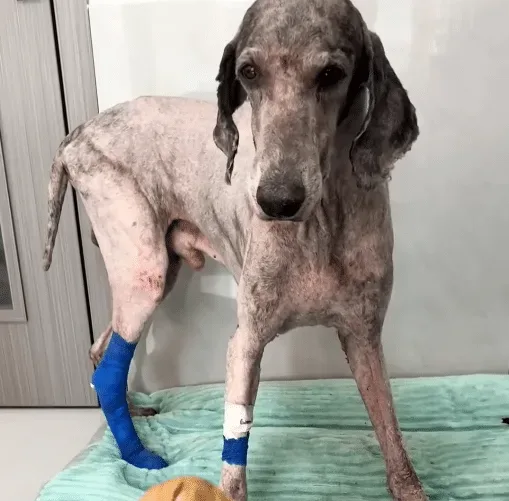
As the last of the fur came away, the toll of the neglect was plain. His skin was infested with maggots, and parasites had gotten into open sores. The worst were between his hind legs, where deep wounds had formed from constant contact with metal bars and waste.
The rescuer went to work on them one by one, cleaning each with hydrogen peroxide and iodine.
With the matted mass gone, his breed finally showed. He was a Giant Poodle, a breed known for intelligence and loyalty, now reduced to skin and bone.
What the Veterinary Clinic Found
The clinic’s findings were serious. He was severely malnourished and had a systemic infection with a dangerously high fever. There were signs of pneumonia, his liver was inflamed, and intestinal distress meant he was passing blood.
Without his coat, he shivered constantly. Staff wrapped a small sweater around his shaved body to help him keep warm.
He looked fragile. Still, he was fighting, and that gave the people caring for him something to build on.
Learning That Hands Can Be Gentle
In the early days, he did not appear to understand kindness. He did not wag his tail or seek attention. When someone came near, he froze, as if bracing for something unpleasant.
Routine made the difference. Food arrived on time. Medication eased his pain. No one shouted and no one hit him. Gradually, his body language began to soften.
Then, one afternoon, the tip of his tail moved. It happened only once and looked almost tentative, but it was the first sign that his fear was starting to loosen.
Recovery in the Body and in Behavior
His physical recovery came in stages. The deep wounds between his legs began to dry and form healthy tissue. His appetite came back, and soon he was finishing his meals eagerly. Weight slowly covered ribs that had once been plainly visible.
Strength returned to his legs, and his eyes grew brighter. He started following his rescuer from room to room. The infection was no longer winning, and his body had room to rebuild.
The change in his behavior was just as striking. He began leaning into touch and resting his head on someone’s lap. Where he had once shrunk from closeness, he now chose it.
Six Months Later, Hard to Recognize
Half a year after leaving the cage, he looked like a different dog. His coat had grown back soft, clean and neatly groomed. He stood upright and alert, with expressive eyes. The dog who once did not seem to know how to wag his tail now met each day with visible joy.
He ran, explored and played. The cage and its smell were behind him, and the fear was fading too.
His story is about more than clipped fur or treated wounds. It shows how much patience it takes to work through layers of neglect, and how a dog can begin to open up once he has safety and steady care.
Opening the cage door was only the first step. What came after was the longer, quieter work of helping him learn a different way to live.