Plenty of animals make themselves known. They cry from a drainage ditch, bark behind a fence, or rush toward the first stranger who slows down.
Hyung made no sound at all.
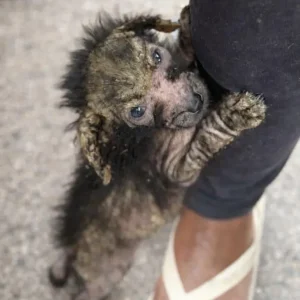
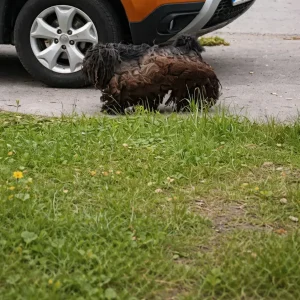
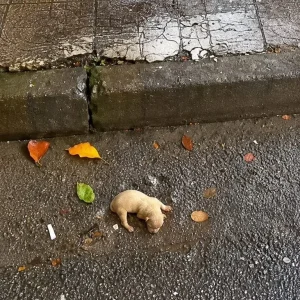
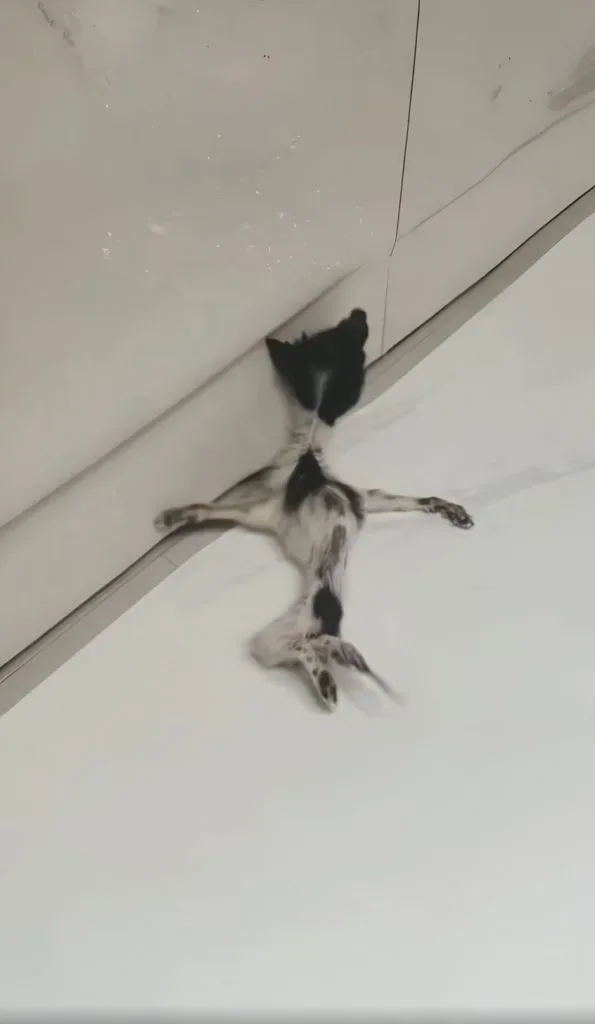
The rescuers who found him in an abandoned garage saw a dog stretched out on a cold floor in poor light. He lay so still that they could not tell whether they were too late. Then they saw his chest move, slowly and shallowly, but unmistakably.
His story did not end with a fast rescue and a happy photo. It stretched across weeks of waiting, first in a shelter and then in a home that was willing to change its daily routine for him. In the end, it turned on a single answer from one woman.
A Dim Garage and a Barely Visible Breath
Hyung’s condition was not marked by a dramatic wound. The alarming part was how little he moved. He was thin, and his muscles had grown very weak. He could not raise himself from the floor, stand, or shift his weight without someone’s help.
A spinal injury had taken away the normal use of his legs. That meant everything depended on the people who had discovered him.
No one knows how long he had been lying in that garage. It is also unknown how many people may have walked past without realizing a living dog was inside. The account assigns no blame. The rescuers’ focus was on a more pressing question: could Hyung survive?
They lifted him carefully off the concrete and took him to a shelter. There, soft bedding replaced the hard floor, and the voices of caregivers filled a space that had been quiet for far too long.
Video: Hyung’s Rescue and What Came After the Garage
What Shelter Care Could and Could Not Provide
At the shelter, Hyung received medical support, regular meals, and a warm place to rest. After being found motionless on a garage floor, that was a major improvement.
Still, his caregivers could see that a few days of treatment would not settle his future. He needed to be repositioned regularly so that pressure would not build up against his fragile body. He needed carefully prepared food to regain strength. Sooner or later, he would also need specialized equipment and a household ready to adapt to his limitations.
Above all, he needed patience. Nobody could say whether he would ever walk normally. The shelter could keep him safe and comfortable, but it could not give him what most dogs want most: a family of his own.
Visitors Stopped, Read, and Moved On
So Hyung waited.
People came through the shelter and paused beside his space. Some crouched to get a better look. Others read the notes describing his condition and stood in silence for a while.
Compassion was easy to see. What followed, though, were practical doubts. Could they manage daily care? Could they take on that kind of responsibility? Would affection be enough to make up for everything he could not do?
One by one, visitors walked on. It was not that Hyung was overlooked, and it was not that no one cared. His needs simply seemed too large for most people to take on, and that is a hard reality for many animals with serious disabilities.
The Woman Who Heard His Story Secondhand
Eventually, Hyung’s story reached a woman who knew one of his rescuers.
She learned the facts: he could not stand, he had been found alone in a forgotten garage, and his future would involve constant care. Those details could easily have made her hesitate, just as they had the visitors before her.
Something else stayed with her instead. Hyung was alert. He watched what went on around him, and there was life in his eyes even when his body could not respond.
She did not wait for easier circumstances or ask whether the job would be simple. She said yes. Hyung left the shelter with a family prepared to accept him as he was. They could offer no guarantee about his recovery, only a commitment that he would not be left alone on a cold floor again.
Learning That Hands Could Be Safe
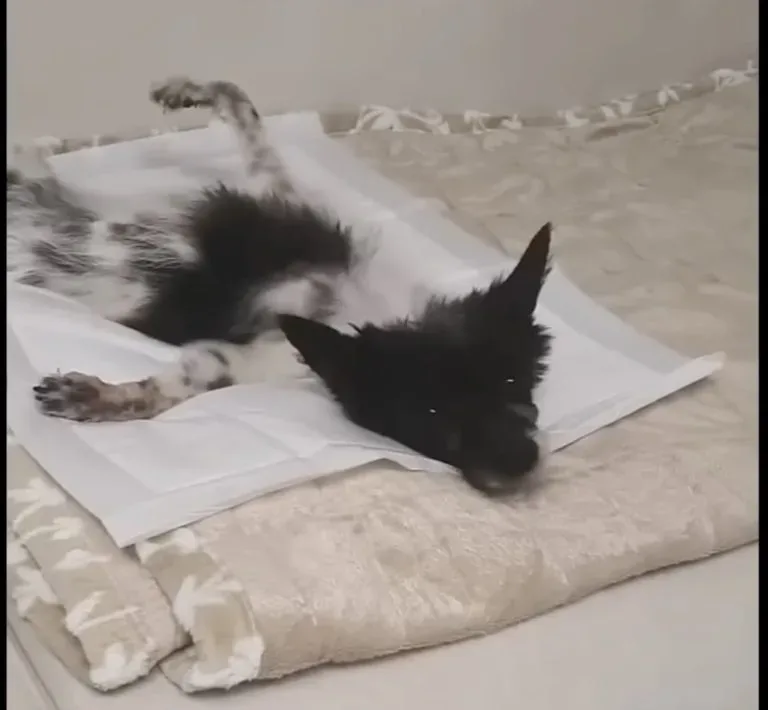
The first days in his new home were quiet. Hyung could not sit or stand comfortably, so even ordinary routines required help. His family repositioned him with care, supported his body, and laid soft bedding beneath him.
When hands came toward him, he sometimes flinched. It was not aggression. It looked more like uncertainty, as if he had not yet learned whether touch would bring pain or kindness.
His family did not demand affection or rush his confidence. They kept their voices low and their movements slow, and they let him observe the rhythm of the household until it no longer felt strange.
Meals were prepared to help his weakened body rebuild gradually. Because sitting was uncomfortable, he often ate while lying down, but he ate steadily, and his caregivers noticed the difference as the days passed. His appetite grew stronger and his coat began to soften. The distant look in his eyes gave way to curiosity.
Trust did not arrive in one moment. It accumulated through one safe interaction after another.
Wheels, Sunshine, and a Yard to Explore
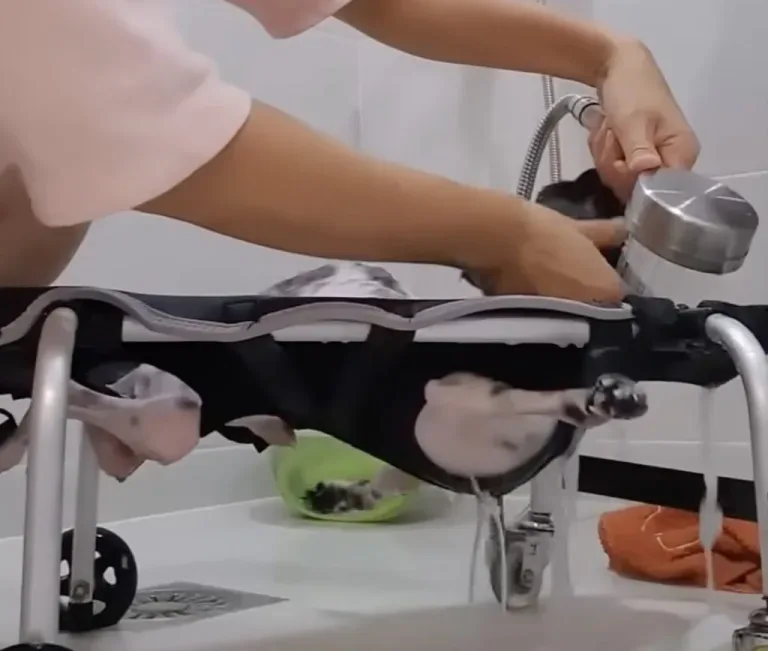
Hyung’s family understood that he might never walk the way other dogs do. They also believed that losing the use of his legs did not have to mean staying in one spot forever. So they arranged for a wheelchair fitted specifically to him.
At first, the equipment was unfamiliar. The support around his body felt odd, and balance did not come easily. He tried to move, stopped, and waited. Nobody pushed him. They adjusted the fit, spoke gently, and offered another try when he seemed ready.
He tried again. He stumbled and paused. Then the wheels turned.
For the first time, Hyung moved forward without being carried. It was only a short distance, but for his family it was a big moment. Over time his movements became steadier. He began rolling across the yard, stopping in patches of sun and investigating scents that had once been out of his reach.
A dog who could not shift his own weight on a garage floor could now choose where to go.
A Companion Named Sobin
Hyung was not the only rescued dog in the household. Another dog, Sobin, soon became his companion.
Their bond did not begin with energetic play. It grew from everyday closeness. They rested near each other through calm afternoons and seemed comfortable simply having the other nearby.
For Hyung, that added something he had rarely known: routine. He was no longer only the fragile dog everyone worried about. He was part of a household, with his own habits, preferences, and place in the family.
The change showed in how he behaved. His body relaxed when people came close, and his tail wagged more often. Where he once pulled back from a hand, he now leaned into it. Hands had come to mean food, support, and affection.
Where Hyung Stands Now
Hyung may never walk like other dogs. His spinal injury remains part of his life, and he still needs help with many daily tasks. None of that has gone away.
But those facts are no longer the whole picture. Today he moves confidently in his wheelchair, explores the yard, eats eagerly, and spends peaceful time beside Sobin and the family who took him in. His coat is healthy and his eyes are bright. The stillness that worried his rescuers in that dim garage has given way to a calm, settled presence.
His story also shows what recovery can look like when not everything can be fixed. Sometimes it is less about repair than about being accepted without conditions, by people who do not measure a life by how convenient it is to care for.
Many visitors looked at Hyung and wondered whether they could give enough. One woman decided that being willing to try was a place to start. Because of that decision, Hyung now has a safe home, a patient family, and the freedom to roll toward the sunlight on his own.