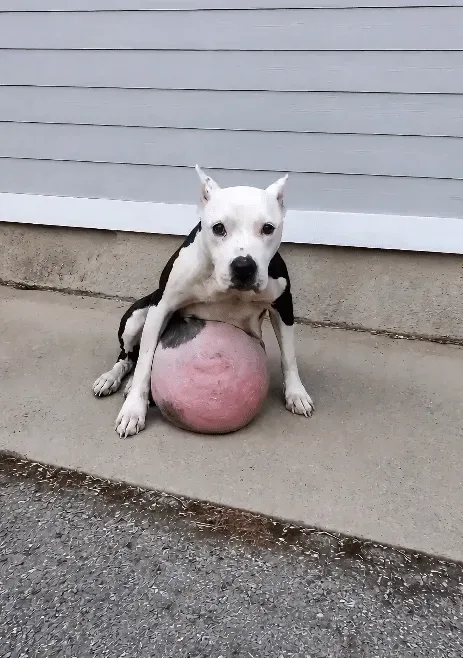
Nina was 8 years old, a Pitbull Terrier, and she was carrying a tumor that weighed nearly 13 pounds.
Her body showed what that burden had cost her. She was dangerously thin, weakened by infection, and running a high fever. Two smaller growths had also formed along her mammary line.
She was exhausted but still breathing, and for the people who reached her, that was enough to begin with. What followed was not a single dramatic rescue moment. It was a slow progression: stabilizing her, operating, recovering, and finally resting somewhere safe.
A Fragile Dog in North Memphis
Nina was found in North Memphis, and rescuers were worried about her from the start.
Her ribs showed beneath her coat. She moved slowly, and standing seemed to take more energy than she had to spare. A serious infection had spread through her weakened body, leaving her feverish and vulnerable.
The mass hung heavily from her body and made every movement harder. Walking took effort, and lying down comfortably was close to impossible. Wherever Nina went, the weight went with her.
The two smaller growths along her mammary line raised more questions about her health. How long she had lived this way is unknown. Her condition suggested only that she had needed help for a long time.
Video: Nina’s Fight for Life and the Surgery That Followed
Why the Operation Had to Wait
Removing the tumor was necessary, but Nina was too weak at first to survive a major operation. The veterinary team had to build up her strength before anything else.
They treated the infection and carefully rehydrated her. Meals were introduced gradually so her depleted body would not be overwhelmed. Each day the team monitored her temperature, her strength, and her overall condition.
Rushing was not an option. Taking her into the operating room too early could have put her life at even greater risk, and a body this depleted had little margin for error.
Over several days, the team watched for small signs of improvement. Her fever began to fall, and she started responding to treatment. Each step brought her closer to the surgery that could free her from the weight.
Preparing for a High-Risk Procedure
Once Nina was considered stable enough, the medical team began preparing for surgery. It was not going to be simple.
The tumor’s size and location called for careful planning and precision. Severe weight loss and infection had already left her with very little strength in reserve.
Still, leaving the mass in place was not a realistic choice. The team weighed the risks of operating against a plain fact: Nina could not keep living with the tumor.
Hours in the Operating Room
During the long operation, the veterinary team removed the nearly 13-pound tumor. They also took out the two smaller growths along her mammary line. Every step carried risk for a dog with so little strength to spare.
When the surgery ended, Nina had made it through. After a procedure of that size on a dog in her condition, no one could take that outcome for granted.
Relief, and a Diagnosis That Left Questions
Further examination of the growths brought both relief and concern.
The two smaller tumors were benign. For a dog who had arrived thin and feverish, that was welcome news.
The large mass, however, was identified as a soft tissue sarcoma. That diagnosis means Nina’s story is not entirely free of uncertainty. The account does not describe what follow-up care, if any, was planned for the sarcoma, so that part of her future remains unspecified.
What is clear is that the weight that had shaped nearly every part of her daily life was gone.
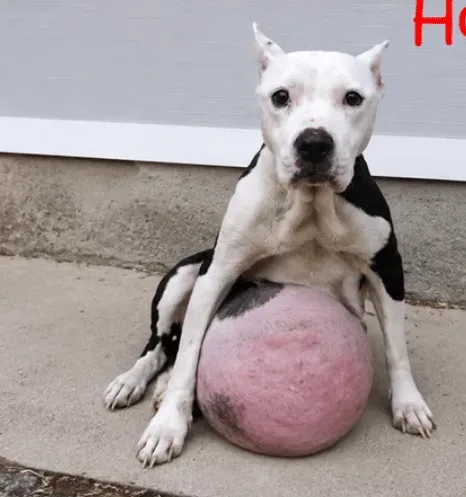
Recovery, One Small Step at a Time
The days after surgery were among the most delicate of Nina’s journey. Her body was tired, and the surgical area needed close monitoring. She stayed under veterinary supervision while the team managed her comfort and watched for complications.
Progress arrived quietly. She showed a little more interest in food. Her eyes grew more alert. She could shift her body without the enormous mass pulling against her.
None of these changes looked dramatic on its own, but together they showed she was beginning to recover.
Her appetite continued to improve. She rested more peacefully, and her movements became easier and more natural. For what may have been the first time in years, she could lie down without arranging herself around a heavy growth.
A Foster Home Built Around Rest
When Nina was strong enough to leave the veterinary facility, a foster home welcomed her.
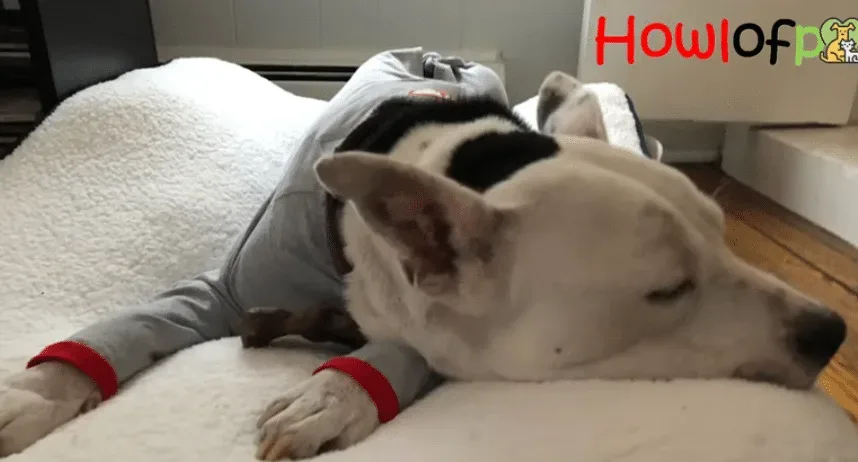
The contrast with her earlier days was striking. Instead of clinical rooms and constant examinations, she had soft bedding, quiet surroundings, and people who cared for her gently. Meals came regularly, and the routine was never rushed.
Her foster family gave her what she needed most: time. With steady meals and continued medical care, her body grew healthier. Her coat began to regain its shine, and her strength slowly returned.
The change showed in her eyes as well. Once distant and tired, they began to brighten.
Nina started exploring her new surroundings with gentle curiosity. She accepted affection and seemed to be learning that hands reaching toward her could bring comfort. She slept deeply and rested without any visible fear.
Life After the Weight
Today, Nina is safe and healthier, surrounded by people who see her as more than the suffering she endured.
Her recovery did not happen in a single moment. It took careful treatment, a difficult surgery, patient foster care, and many small acts of kindness.
The tumor had restricted nearly every movement. With it gone, Nina has the chance to know a life shaped by comfort rather than pain.
Her story is about more than a successful operation. It is also about the rescuers who reached her, the veterinary team that accepted a serious risk, and the foster family who gave her a quiet place to heal.
Nina is alive because people looked at a dog in desperate condition and decided her life was worth fighting for. Having carried so much for so long, she can now move forward without it.