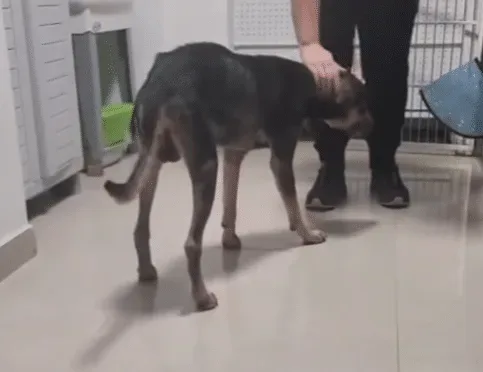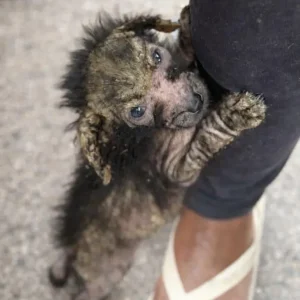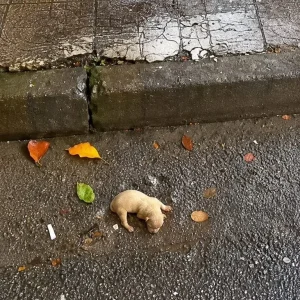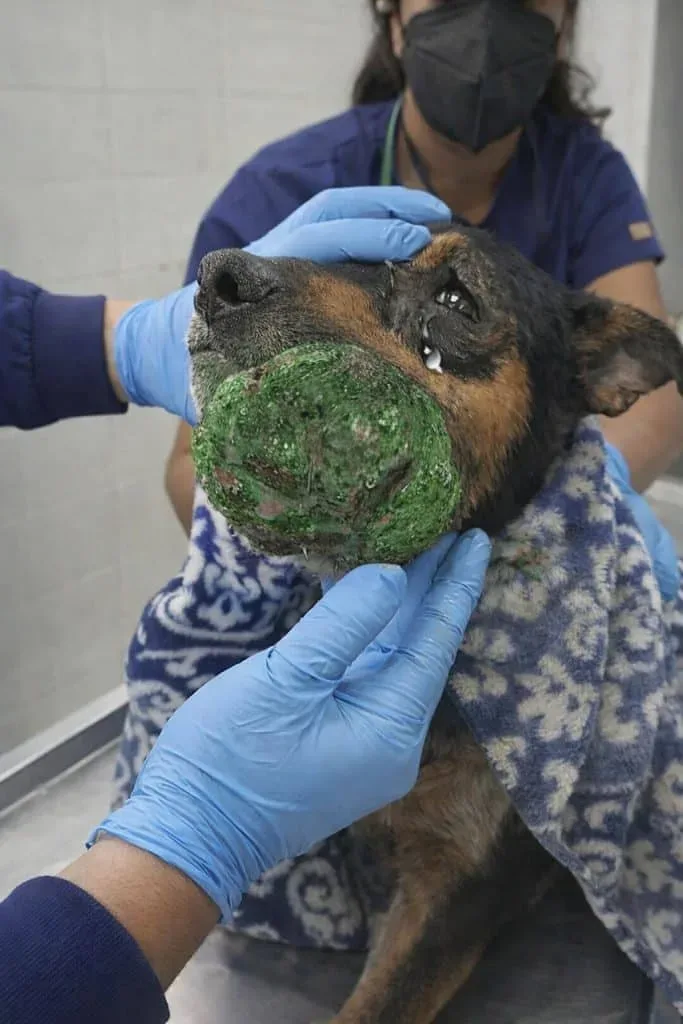
Most people who passed Thamos saw the growth on his face and kept walking. A few slowed down for a second look, but almost none of them came closer.
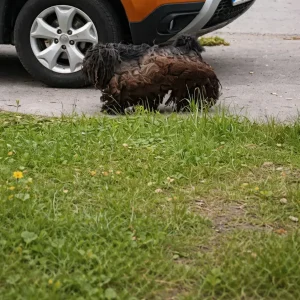
He spent his days around drainage corners and narrow passageways. Once the streets emptied, he came out to look for something to eat. The rescue account describes a tired, gentle dog carrying a weight he could not remove by himself.
What happened next depended on someone being willing to approach him slowly. It also depended on money, medical skill and a good deal of patience.
A Dog Who Lived Where People Rarely Looked
According to the rescue account, Thamos seemed to expect little from people. He rested in hidden spaces where he was unlikely to be noticed. When hunger forced him out, he moved carefully and stayed ready to disappear again.
The growth on his face affected more than his appearance. Its weight caused him constant discomfort and made daily life harder. The reactions of strangers may have added to his isolation. People noticed the face before anything else, and very few stayed long enough to notice the dog.
The account does not say what the growth was or how long he had lived with it. It does make clear that he was worn out and that almost nobody had offered him real help.
Video: Thamos Meets Rescuers Who Chose To Move Slowly
The Rescuers Who Slowed Everything Down
The people who eventually found Thamos saw how exhausted he was. They also understood that pushing for contact would probably send him straight back into hiding.
So they did the opposite. They offered food, kept their distance and gave him room to breathe. Thamos was allowed to decide how near he wanted to come.
It was a small shift in attention. Instead of staring at what made him different, the rescuers concentrated on what he needed. After so long spent avoided, that may have been the first sign that not everyone would turn away.
Learning What a Quiet Shelter Feels Like
Once Thamos was in the shelter, the first goal was simply to help him feel secure. His meals arrived on a regular schedule, and his resting area stayed calm. Caregivers spoke softly and moved with care. Nobody asked him for affection or expected him to trust them right away.
He watched them at first, and he stayed guarded. He seemed to study each person who came in, as though working out how fast he might need to retreat. But the same people kept returning, food kept appearing, and the hands that reached toward him never turned rough. Slowly, the tension in his expression began to ease.
The Problem That Calm Could Not Solve
Safety and routine helped, but they did not remove the growth. According to the account, it needed a complicated surgical procedure. The operation was delicate and costly, and it could not be attempted until Thamos was in better overall condition.
The shelter could give him patience and a predictable day. Surgery would take far more than that.
Strangers Who Never Met Him Made a Difference
For a time, his future was uncertain. The need for treatment was obvious. Whether the rescue could pay for it was not.
Then his story began to travel beyond the shelter. Support arrived from different places, some of it modest and some larger. Most of the people who gave had never met Thamos. They simply believed he deserved relief from what he was carrying.
Together, those contributions gave him something the streets never had: a real chance at treatment. The people closest to him could provide shelter and daily care, but the larger medical plan depended on a wider circle of helpers working from a distance.
Getting Strong Enough to Face Surgery
Even with funding moving forward, Thamos could not go straight into the operating room. Long-term discomfort, poor nutrition and the stress of life outdoors had taken a toll on his body. The medical team wanted him stable enough to go through the procedure safely.
His preparation began with ordinary things: nutritious meals, clean water, a warm place to sleep and a steady daily rhythm that let his body and mind rest.
The changes came gradually. He moved with a little more energy and showed more interest when food arrived. He stayed in view for longer stretches instead of retreating the moment someone appeared. He also seemed to learn his caregivers’ voices, and when they came near, he no longer looked ready to vanish.
On some days he stayed beside them even after he had finished eating. For a dog who had spent so much time hiding, that quiet choice suggested that trust was starting to form.
As his health improved, new examinations were completed and the surgical plans moved ahead. In the end, the veterinary team decided he was ready.
A Long Operation and a Slower Recovery
The surgery lasted for hours, and each stage called for care and precision. The purpose was not to change how Thamos looked for the sake of it. It was to relieve him of the weight and discomfort he had lived with for so long.
Outside the treatment area, the rescuers waited with a mix of hope and worry. They knew this was the opportunity everyone had been working toward, and they knew a complex operation always carries some uncertainty. The account does not describe the procedure itself in detail.
Then it was over, and Thamos had come through it. Relief spread through the team, although his journey was not finished. The burden had been removed, but healing would take longer.
In the first days afterward, he rested under close observation while caregivers monitored his condition. They kept up the same calm routines that had helped him feel secure before the operation. His face needed time to heal. The part of him that had learned to expect rejection may have needed time too, and nobody tried to rush either one.
A Lighter Face and a Softer Way of Staying Close
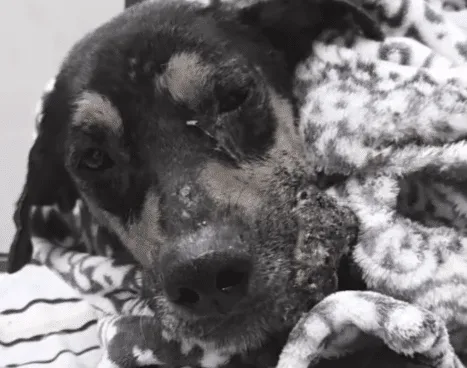
Little by little, the change became visible. As the swelling eased and healing continued, Thamos’s face settled into a softer, more natural shape. He moved more lightly, as if something had been lifted from more than just his body.
Energy came back first, and curiosity followed. He began to stay nearer to the people around him. Instead of heading for the farthest corner, he watched his caregivers with calm interest. When they spoke, his attention followed their voices. When someone offered a gentle hand, he let it rest there.
The most meaningful difference was not one a camera could easily capture. Thamos seemed to stop bracing for rejection. He lingered beside familiar people and accepted their quiet company.
That trust grew through small, repeated moments: a meal set carefully in front of him, a familiar greeting each morning, a hand resting nearby without asking for anything. For many dogs, these are simply parts of an ordinary day. For Thamos, they showed that kindness could be consistent.
The Family Who Stepped Forward
When Thamos was ready for adoption, a family came forward. They knew his history and the medical road he had already traveled. They also understood that he might need patience as he adjusted to a permanent home.
The dog they saw was not the frightened one who had once sheltered beside drainage areas. He was the gentle companion who had emerged during recovery, with his quiet nature, his growing affection and the calm way he stayed close to people he trusted.
That changed what the shelter meant for him. He was no longer waiting there because he had nowhere else to go. He was preparing to leave because a home was waiting.
In that home, his comfort would no longer depend on donations or temporary arrangements. The family is offering regular meals, familiar faces and a settled routine. He would no longer have to hide simply because his appearance made someone uncomfortable.
For years, strangers saw the growth on Thamos’s face and stepped away. The rescuers looked closer. They found a dog in discomfort who needed treatment, and who had learned to stay hidden because the world had given him little reason to do otherwise.
After that, many people played a part. Veterinarians contributed their skill, and caregivers contributed patience. Donors gave what they could, and a family offered what no single donation could: a lasting place to belong.
The growth may have been the first thing people noticed about Thamos, but it was never the most important thing. Now he is moving toward a life built on belonging rather than avoidance.