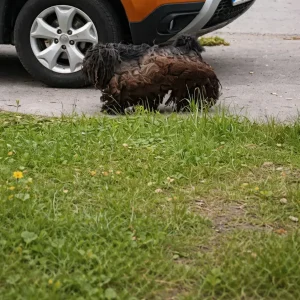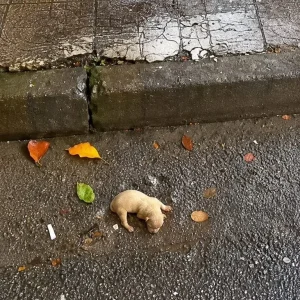
Nothing about the property suggested life. The gates were still, the windows were dark, and there was no sign that the owners meant to come back.
But the building was not empty. According to the rescue account, when the breeding operation shut down, its dogs were simply left behind. Dozens of small dogs were still shut in, unable to open a single door on their own. Mothers lay curled around their newborns in tight spaces and used their own bodies as the only protection available.
Getting them out would take patience more than speed. It meant leaving food on the floor, waiting for official approval, and then spending days and weeks on baths, bedding, and treatment.
Dozens of Small Dogs Behind a Locked-Up Facade
Once the rescuers went in, the quiet of the old facility proved deceptive. Eyes followed them from corners and enclosures. Some belonged to guarded adult dogs, and others to puppies who were still wholly dependent on their mothers for warmth, milk, and safety.
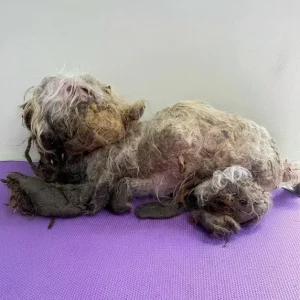
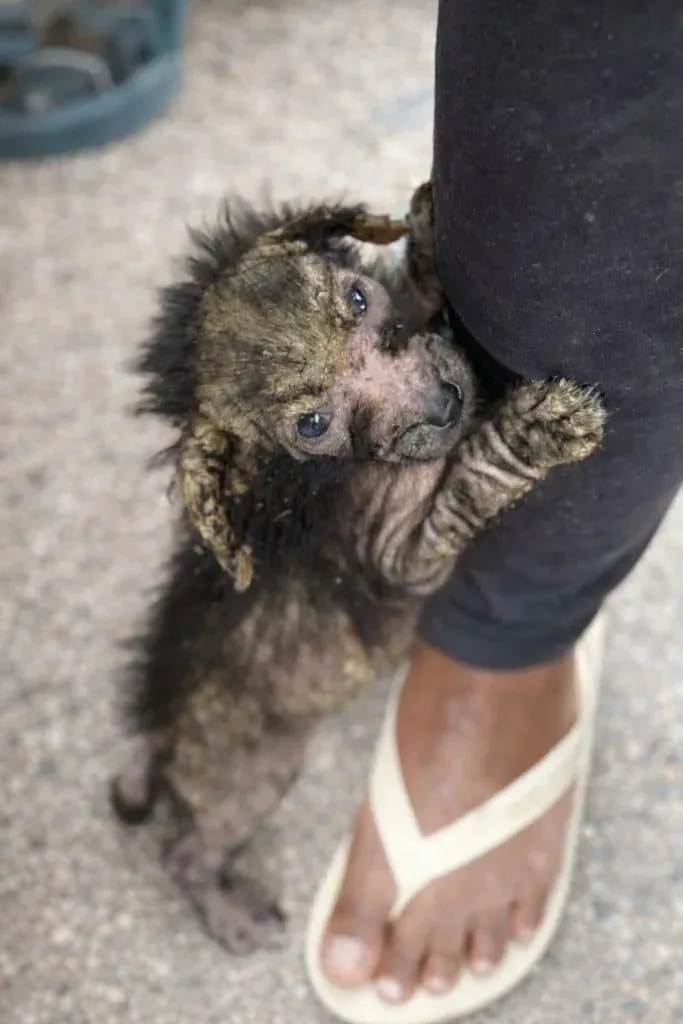
The effects of long neglect showed on almost every animal. Many had lost big patches of fur, and their skin appeared dry and sore. Their narrow frames pointed to a diet that had been inadequate for a long stretch of time.
Seen from the road, the place looked abandoned. Seen from inside, it was crowded with watchful animals that had been waiting through the dark.
Video: Mothers and Puppies Found Waiting Inside a Shuttered Breeding Farm
Mothers Standing Guard Over Their Litters
The adult dogs reacted the moment strangers moved closer. They drew in toward their young. A few wedged themselves directly between the newcomers and the puppies, as if prepared to block the way.
That reaction told the rescuers a good deal about how these families had been living. Every puppy stayed within reach of its mother, and every mother kept her body facing the people in the room.
The team did not try to override that protectiveness. Any approach, they recognized, had to be gradual, and the mothers needed time to see that these visitors were not a danger.
Food First, Handling Later
So the rescuers did not reach for anyone. They put bowls of food down within the dogs’ reach, talked quietly, and backed away.
At first the room stayed motionless. Then a single mother inched forward and lowered her head to the food, though she never took her gaze off the people on the other side. A second dog followed her lead, and soon several mothers were eating while their puppies stayed tucked behind them.
Appetite and wariness were clearly pulling in opposite directions. The mothers ate, but only in short stretches between watching the room, and none of them wandered far from her litter.
It was a modest first step. Even so, it showed that the dogs, after what they had been through, still had some capacity to take a chance on people, however tentatively.
The Approval That Had to Come First
Reaching the dogs did not mean being able to take them. Because the operation had been abandoned, the rescuers faced legal and administrative hurdles before anyone could be carried out.
Permission had to be obtained, questions answered, and arrangements made for shelter and veterinary care for dozens of animals the instant they left the building. In the meantime, the dogs remained exactly where they were.
The rescuers kept pressing. They stayed in contact with the people involved, went back to the property, and continued to ask for authorization to remove every mother and every puppy. The account does not explain how long the wait lasted or who ultimately had to approve it, so those details are unknown.
What it does report is that approval did come, and that was what allowed the rescue to go ahead.
Leaving the Building, Litter by Litter
With permission secured, the dogs were lifted out one at a time from the spaces that had confined them.
Mothers and puppies traveled together. The team kept each family as intact as they could, so the youngest dogs would not lose the one familiar presence in their lives at the moment everything else was changing.
Whatever the dogs made of the move, they had no way of knowing their destination. Strangers were carrying them out of the only place they had ever lived. This time, though, the destination was a rescue center ready to take them in.
Clean Blankets, but Hard to Trust
Inside the center, nearly everything was unfamiliar. There were clean blankets to lie on, fresh water within reach, and meals that did not have to be fought for. Each mother received a calm corner where she could stay beside her puppies as she adjusted.
A softer setting did not bring instant relaxation. Many of the dogs were too tense to rest. Some planted themselves over their babies and tracked everyone who came through the door, and others would not lie down at all, as though expecting the worst.
Staff did not hurry them. Food was brought in quietly, dirty bedding was exchanged for soft blankets, and nobody pressed the dogs for affection or tried to coax them into contact. Time was what the caregivers offered.
As the room dimmed and quieted, tiredness started to win out over alarm. One mother lowered herself to the floor and her puppies nestled along her side. Soon another family settled on a nearby blanket, and then a third. By then the room had gone still in a way it hadn’t been before, and every dog in it was finally resting.
Skin Care and the Slow Bath Routine
Meals and quiet were only part of the plan. Many of the dogs had skin problems tied to their long neglect, and the bare, tender patches called for steady treatment and gentle handling.
The early baths moved slowly. Caregivers held each small dog while rinsing off layers of grime, and whenever one stiffened, they stopped and waited for her to relax before continuing.
Being held by a person looked unfamiliar to some of the dogs. Their bodies stayed rigid and their eyes tracked every hand, as if they expected pain to follow.
What followed was warm water, soft towels, and medication, repeated day after day. Nourishing food helped the mothers rebuild their strength, clean bedding protected skin that was healing, and veterinary care gradually eased the irritation.
Emotional healing lagged behind physical healing. Early on, most dogs came near a person only when food had been set out, then hurried back to their puppies as soon as they finished.
Small shifts followed. One mother lingered next to a caregiver after her meal was gone. A puppy walked up and sniffed an open hand. Another dog accepted a light touch and did not pull away. None of these moments lasted long, but together they hinted that the dogs were beginning to learn that people could come into the room without bringing harm.
Weeks Later: Regrowth, Weight Gain, and Play
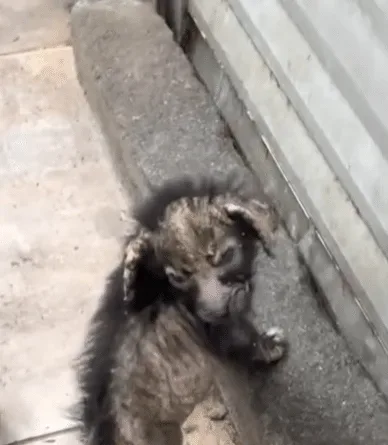
As the weeks went by, the improvement became obvious. Red, inflamed skin settled down, and bare spots gradually filled in with new fur. The mothers put on weight and grew more alert, and the puppies gained strength from their regular meals.
Then the puppies began to play. Their first attempts were hesitant, mostly sniffing around the edges of their bedding and inspecting the toys left nearby. Soon they were chasing each other across the floor, tussling over blankets, and scrambling over their mothers while they rested. A room that had once been so quiet was now loud with activity.
Some mothers were content to look on, while others eventually joined in, revealing a lighter side that fear and exhaustion had kept hidden.
Caregivers also began to see how much the dogs differed. One mother liked to lie quietly with her litter. Another stationed herself by the entrance whenever familiar staff arrived. Certain puppies charged at anything new, while others preferred to watch first and join in later. At the breeding operation, these animals had been treated as part of a business. At the rescue center, they were showing distinct temperaments of their own.
Where the Dogs Stand Now
According to the account, the mothers and puppies are now safe. They have clean bedding, regular meals, medical attention, and gentle handling. Their fur is still growing back and their skin is still healing. The puppies run freely, and their mothers no longer have to stand watch every minute.
Not all of the dogs are ready to move on. Some need more time before adoption, while others are already getting used to the calm of a predictable day. When each one is ready, the hope is that she can go to a home as a companion rather than as part of a breeding business. The account does not describe any specific adoptions, so that part of the story is still open.
What the account does make clear is how the change came about. There was no single turning point. It came from ordinary care repeated daily, such as clean water, soft blankets, steady meals, quiet voices, and a refusal to rush any dog beyond what she could handle.
The people who ran the farm had gone, and the dogs were left locked inside. They were eventually reached, and their lives now follow a very different routine.