
The house had already been emptied by the time the rescue team walked through it. Broken furniture and scattered debris were all that an eviction had left behind, and the property had the hollow quiet of a place everyone had abandoned.
The team was getting ready to leave when someone noticed a small metal crate pushed against the fence.
Inside was a tiny dog. She was so still that no one could tell at first whether she would respond to them at all. Her body was painfully thin, much of her coat was missing, and her breathing was so faint that it was hard to see.
The team would learn later that her name was Lexi. In that moment, what mattered was how quickly she could reach a veterinarian.
What Eight Pounds Looked Like Inside a Metal Crate
When the crate was opened, the full scale of her condition became clear. Lexi weighed only eight pounds. Her muscles had wasted away, and her body showed the effects of starvation, dehydration, and long confinement.
The space left almost no room to move. There was no soft bed and no place to stretch out, and she had no way to leave on her own.
What troubled the rescuers most was how little she reacted. She did not bark, and she did not try to get away. When gentle hands reached for her, she stayed exactly where she was. It did not read as calm. It made the situation feel more urgent.
The team wrapped her in blankets and carefully lifted her out.
Video: Rescuers Find a Barely Moving Dog in a Crate and Carry Her Out in Blankets
Heat, Fluids, and a Heart That Struggled to Keep Time
At the veterinary clinic, the staff began work right away. Lexi’s body temperature had dropped dangerously low, and her heart was having trouble holding a steady rhythm. She was also severely dehydrated and physically exhausted.
Intravenous fluids were started, and heating pads were placed around her small body. She received an albumin transfusion as well, to support a body with very little reserve left.
No one could promise how she would respond. The goal of those first hours was simple: keep her stable. Everything else had to wait.
A Few Fragile Days
For the first several days, Lexi remained extremely fragile. Some mornings she opened her eyes and reacted to the voices around her. At other times she hardly moved at all.
Volunteers stayed close. One person gently massaged her stiff legs to help keep them moving, while others sat beside her and spoke quietly as treatment continued.
Progress was slow and uncertain, and the staff learned to measure it in very small things.
The Lifted Head, the Shaky Stand, and One Wag
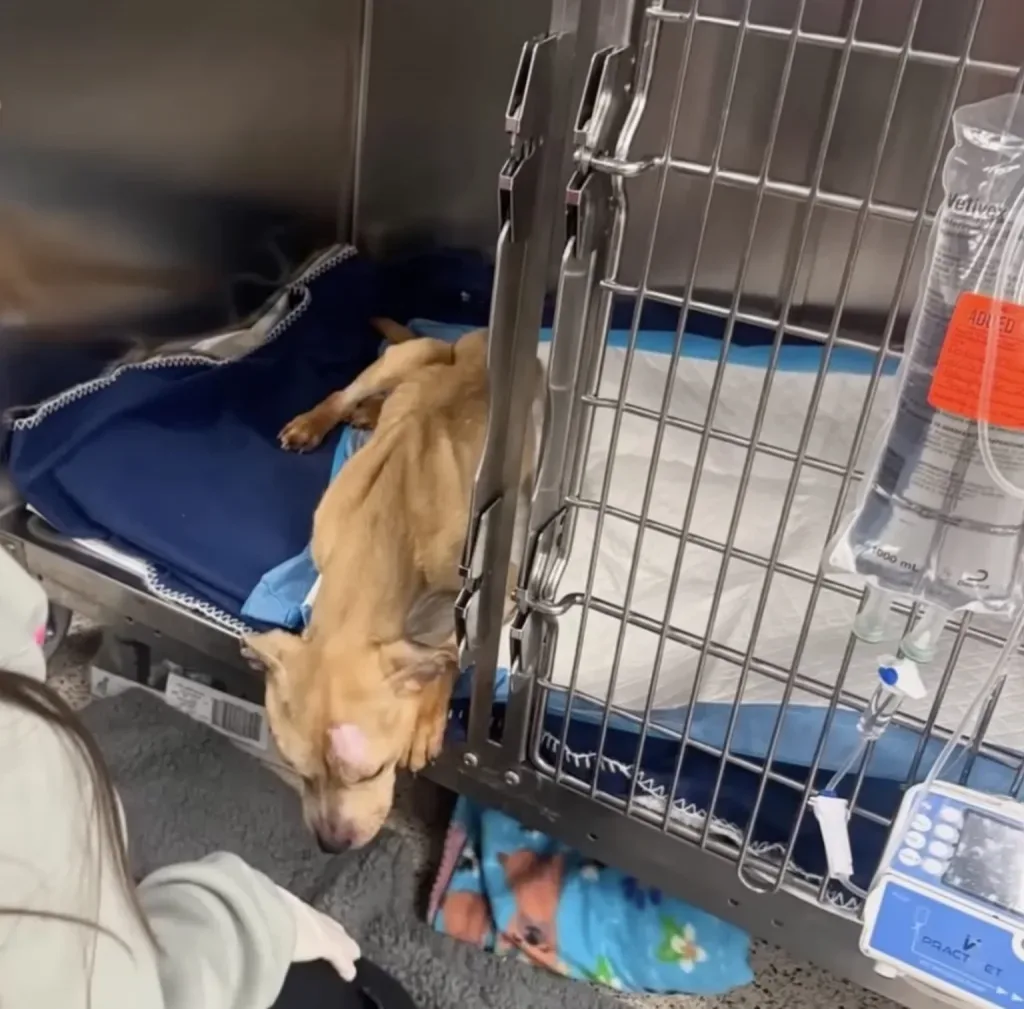
The first important sign was easy to miss: Lexi raised her head. Her neck trembled, and she could hold the position only briefly before lowering it again. Still, it was the clearest indication yet that her body was beginning to recover.
Other changes followed. She was able to sit upright and accepted tiny bites of food. With support, she started to put weight on her legs. Standing at first required hands on either side of her body, and her legs shook beneath her.
Then her tail moved. It happened only once, but it came from a dog who had barely reacted inside the crate, and it meant a great deal to the people watching.
Toys, Appetite, and a Returning Curiosity
Over the following weeks, Lexi’s condition kept improving. Her appetite became more consistent, weight returned, her coat began to thicken, and her eyes looked more alert.
With strength came interest in the world around her. Unfamiliar toys startled her at first. Then curiosity won out. She sniffed them, touched them with her nose, and eventually pawed at them and responded to the sounds they made.
Caregivers noticed a change in how she treated people, too. She watched familiar staff come into the room, leaned into gentle touch, and greeted people with more visible interest. Recovery was no longer only about keeping her alive. She finally had enough energy to explore.
Walking Toward Familiar Faces
The change continued gradually. Lexi moved more comfortably, her body filled out, and her coat grew healthier. Rather than staying put and waiting for caregivers to come to her, she began approaching the people she knew.
Her days came to include ordinary things: walking around a room, resting on soft bedding, investigating toys, and receiving affection. They may have looked simple, but they were a long way from the life of the dog found in a metal crate.
She no longer had to spend everything she had on staying conscious and warm. Some of that energy could now go toward movement, curiosity, and company.
An Adoptive Family, a New Name, and a Pup Cup

When an adoptive family eventually came to meet her, they found a much stronger dog than the one rescuers had carried off the abandoned property. They chose to bring her home.
The new home came with a new name: Molly Brown, inspired by the woman remembered as “the unsinkable Molly Brown.” For a small dog who had come through such severe neglect, it seemed to fit.
The ride home was another unfamiliar experience. Molly trembled at first, and her new family kept her close and spoke to her gently. Along the way she was introduced to an ordinary pleasure, a pup cup. By the time they reached the house, she was beginning to settle into the arms holding her.
The adjustment was only beginning, but this was a household that had chosen to welcome her.
A Sunlit Home After the Empty House
Updates from Molly’s family describe a very different life. She sleeps on soft blankets, rests in patches of sunlight, and explores her home. Her movements have become confident, and the dog who once weighed eight pounds and barely reacted to voices now takes part in the routines around her.
Her rescue did not hinge on one dramatic moment. It happened in stages. Someone noticed a crate, and someone opened it. Veterinarians restored warmth and fluids, and a transfusion supported her body. Then came food, a raised head, a supported stand, and a single wag of the tail. After weeks of rebuilding her strength, a family arrived.
Lexi’s world had once been the inside of a metal crate beside an empty house. Molly Brown lives somewhere much larger now, in a home where someone notices when she walks into the room.